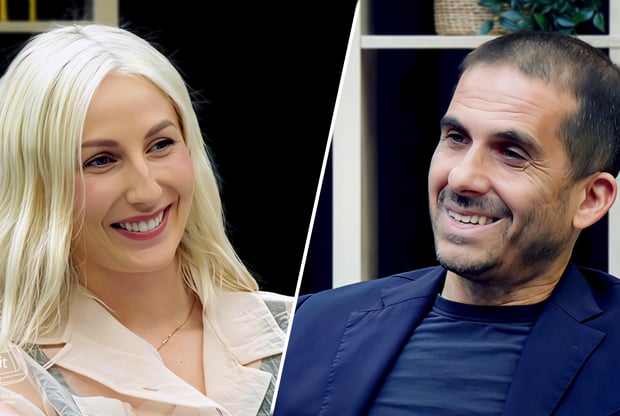
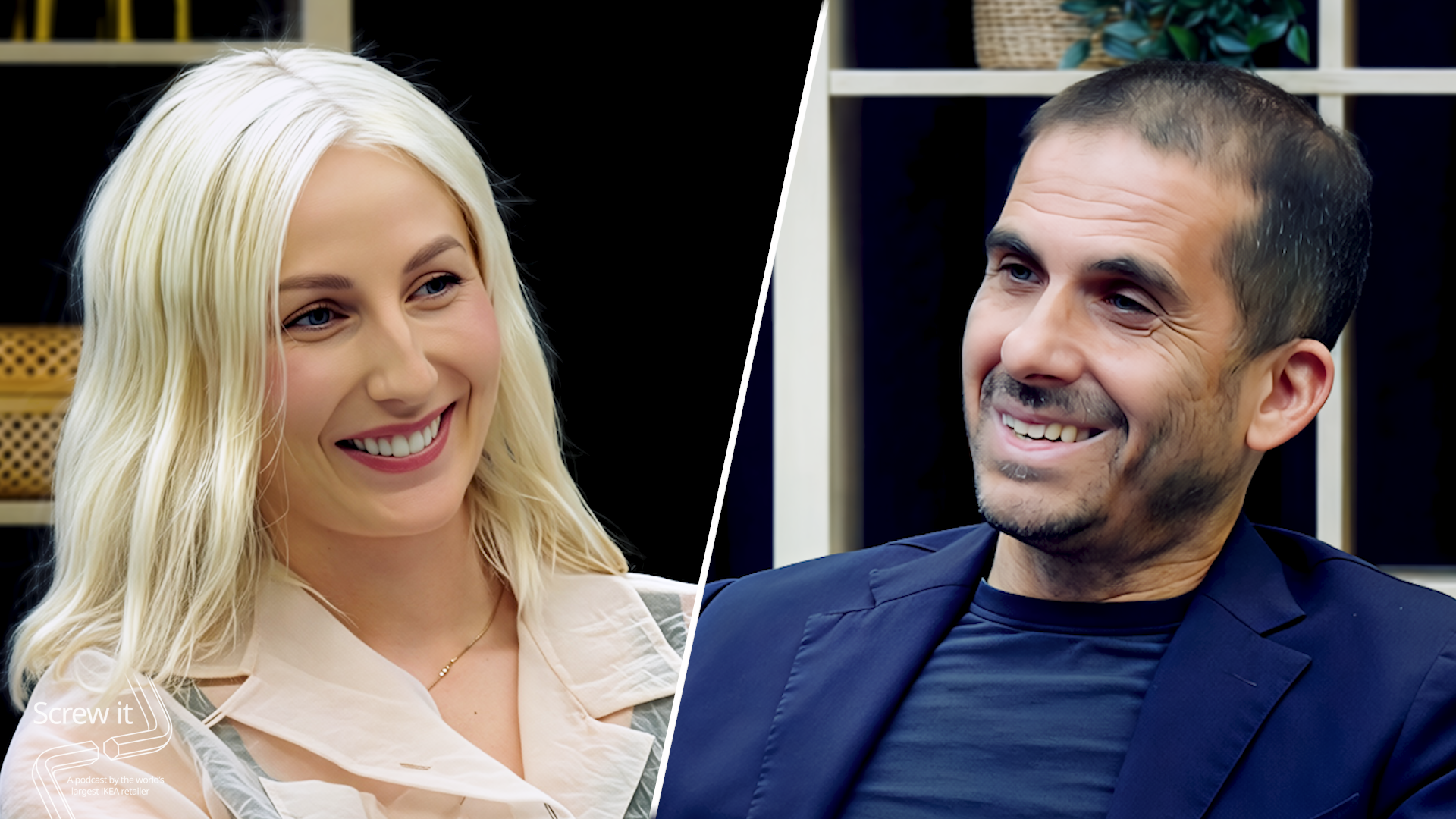
Vincenzo Riili joined Ingka Group as Chief Marketing Officer in early 2026, bringing with him 25 years of experience across Unilever, Google and PepsiCo. In the latest episode of Screw It, the podcast from the people behind the world’s largest IKEA retailer, he sat down to talk about what’s actually changing in marketing, why most people working in AI are making it up as they go, and why he thinks the biggest risk for big brands right now isn’t their competitors. It’s the salami.
The foundations haven’t changed. Everything else has.
Vincenzo opened the conversation by pointing to Thomas Lipton, yes, the tea guy, parading pigs through London in 1905 to get attention. His point: the fundamentals of marketing have never really changed. Knowing your product. Understanding your customer. Delivering the right message at the right time. What’s changed is everything around that.
“The foundation does not change,” he said. “But data and omnichannel is the only way to actually make brand work today.”
He’s particularly energised by what AI is doing to content creation, not just automating it, but democratising it. A coffee shop can now make a Christmas ad as good as Tesco’s. A local brand can compete on Instagram with a fraction of the budget. That’s a genuinely new landscape, and Vincenzo thinks most marketing organisations haven’t caught up with what it means.
The funnel is dead. Long live the messy middle.
One of the more striking moments in the conversation came when Vincenzo described the death of the linear marketing funnel. The old model was simple: see an ad, visit a shop, buy a thing. Awareness to consideration to conversion, in that order.
Now? Someone can be sitting on your sofa in one of your stores, physically testing the product, and simultaneously buying from a competitor because a pop-up ad appeared on their phone with a 50% discount.
“The consideration and evaluation is happening over and over again,” he said. “We go from a linear funnel to: I’m making sure we’re present at any touchpoint, building up to the final sale, which can still be disrupted at the last second.”
He sees AI making this more complex still, but also more manageable, if you use it right. The shift from one-to-many to one-to-one communication at scale is real, and the brands that invest in the data infrastructure to enable it will have a genuine edge.
Brand vs performance: the salami problem
Vincenzo was candid about an industry tendency he’s spent years thinking about — the false opposition between brand building and performance marketing. He partly blames Google (where he worked for a decade) for setting it up that way in the first place.
His view: performance marketing delivers short-term sales. Brand investment is the infrastructure that makes performance marketing work. If you only optimise for the short term, you’re slicing the salami. It looks fine today, tomorrow, next week. Then there’s no salami left.
“I think CFOs and CMOs should work for the next CFOs and the next CMO,” he said. “It’s too easy to exploit brand value that somebody built in the past, destroy it, and hand over zero to whoever comes next.”
His preferred framing: stop running separate brand and performance teams entirely. The lines are blurring, and AI is accelerating that. Done well, a one-to-one conversation can perform and build brand simultaneously.
Nobody knows how to optimise for AI. And that’s fine.
Asked what brands should be doing to optimise for AI-driven search, Vincenzo said anyone who tells you they’ve figured it out is lying.
“We are all in experimental mode right now, with tools that are changing every month. Something you figured out last week might not be valid any longer because there’s a new tool.”
What he does know: LLMs are replacing search engines as the way people find answers, which means the rules of visibility are changing. If someone asks an AI for the best value sofa and IKEA doesn’t appear in the response, there’s a problem — regardless of whether the AI’s answer is actually correct. Structuring your data and digital presence so that LLMs can draw on it accurately is table stakes.
On influencers, communities and letting go
The conversation moved to influencers, and the tension between a brand’s instinct to control its message and the reality that most of what’s said about a brand online is earned, not owned. Vincenzo’s advice: pick influencers who genuinely like what you sell, give them room to be themselves, and accept that if you try to script authenticity, everyone can tell.
He also made a point that felt particularly relevant for Ingka. The most credible voices for a brand are often already inside it, engaged employees who talk about their work because they want to, not because they’ve been asked. Building that community is both good marketing and, as he put it, good for the internal environment.
The future marketer: thriving in ambiguity
For students studying marketing now, Vincenzo had one piece of advice: the professors can’t give you the edge you need, because no one has built it yet. The best thing you can do is stay curious, stay updated, and get comfortable with not knowing.
“I’m a student, just like you,” he told university audiences. “If I’d come here 20 years ago I’d probably be the teacher. But right now, I’m exactly like you.”
He wants to build a marketing team at Ingka that doesn’t just cope with ambiguity — that genuinely thrives in it. People who see constant change as a feature, not a bug. The velocity of development in AI right now means the use cases from last year may not be relevant today. Past experience is still valuable, but the willingness to experiment is more important than ever.
Screw It is a podcast from Ingka Group. New episodes are available on Spotify.
About the Podcast
Screw It is a new podcast from Ingka Group, the largest IKEA retailer, exploring the “art of assembly” in business, sustainability, and life at home. The series invites global experts and leaders to discuss how we piece together better homes and societies—even when life looks nothing like the manual. From a company that wants people to sit comfortably, but recognises that progress is often uncomfortable, Screw It ditches the corporate script to embrace the “wonderful mess” of building a better future.
About Ingka Group
With IKEA retail operations in 32 markets, Ingka Group is the largest IKEA retailer and represents 87% of IKEA retail sales. It is a strategic partner to develop and innovate the IKEA business and help define common IKEA strategies. Ingka Group owns and operates IKEA sales channels under franchise agreements with Inter IKEA Systems B.V. It has three business areas: IKEA Retail, Ingka Investments and Ingka Centres. Read more on Ingka.com.
Screw It episode 3 – Conversation transcript
“Everyone’s a student now: Ingka’s CMO on marketing, AI and the future of brand”
Guest: Vincenzo Riili, Chief Marketing Officer, Ingka Group
Kat: Welcome to the latest episode of Screw It. Today I’m joined by Vincenzo Riili, the new CMO of Ingka Group. We talk about all things marketing — the past, the present, the future. And now everyone’s a student and no one’s a master. I hope you’ll enjoy it.
Kat: So, Vincenzo, thank you so much for joining me.
Vincenzo: Of course. Lovely.
Kat: You’ve recently moved to Sweden, or you’re in the process of moving here?
Vincenzo: Yeah. I actually moved three months ago, although I’m still commuting back and forward because my family is still in Milan, where I’m from. In June the whole family will come over so everything will be complete.
Kat: That’ll be a nice time to move to Sweden as well.
Vincenzo: Oh yes, it’s all planned. When I landed on the 12th of January it was snowing, it was all dark. I thought: okay, if my wife and my kids see that it’s not going to work. But I’m sure it’s going to be fantastic — I love it a lot.
Kat: What’s your take on our coffee, as an Italian?
Vincenzo: I have to say, it’s very good. I’ve actually started not drinking espresso and drinking your coffee. I think it’s not bad at all. I like it. I’ve been living in many places in the world so I’m not as strict an Italian as some would be. I’m very happy to try new things.
Kat: You’ve worked for Google, Pepsi, Lipton, Unilever. You’re going from one of the most data-rich digital environments to a company rooted in physical retail.
Vincenzo: That’s true, but IKEA has a lot of data as well. Google is obviously more digital and knows how to use data — and it can provide solutions for a company like IKEA to use data accordingly. I feel like I’m picking up Google again. But there was a lot of interest for me in exploring new worlds. I started at Unilever, which is a production company — produce products and then market them. I did that for about 15 years in global jobs. Then the last ten years in digital. And I really wanted to go back and apply what I learned at Google, to help another company transform. IKEA was a fantastic opportunity because yes, it’s rooted in stores, but data and omnichannel are part of it too. There is a big room for us to do a lot of things here using what we learned.
Kat: Would you say data governance is the foundation of your approach to marketing?
Vincenzo: My foundation is the basic marketing idea. Think about Thomas Lipton — he was importing tea in the early 19th century and went around London with pigs with signs saying “By Lipton”. Even in 1905 there was a need to cut through and get attention. So the basic of attention — having creativity, communicating, attracting people, branding — that is the foundation. Now data and omnichannel is the only way to actually make brand work today. Marketing is about knowing the product very well, knowing the consumer, and connecting with them by delivering effective communication to the right people in the right moments. And obviously now data is the way to do that.
Kat: Has AI changed the way you look at data and marketing in general?
Vincenzo: It’s changing everything, to be honest. Within marketing — and not just data — the world is changing. There is a big evolution in content creation. You can now — and you will even more so, because we’re seeing developments every week — produce content that is easier and cheaper. You can easily have anyone produce a TV ad with a ship in the middle of Copenhagen fighting a dragon. That would have been impossible or very expensive in the past. AI is also working to understand how to connect with consumers in different ways, so creativity can change according to who receives it and when. We’re going from one-to-many communication to one-to-one. You might receive a different message depending on whether it’s snowing, or whether you’ve been in the shop or not. The whole value chain is changing.
Kat: The younger generation is becoming more clued up about what is marketing because they’re being marketed at so much. How do you reach them?
Vincenzo: That’s a very good point — it’s not just young people who are more sophisticated. Everybody can recognise marketing tricks instantly now. Which means you need to be more authentic — and I really mean that, it’s not just a nice word to use. You need to be useful for that connection. In the past, you’d interrupt my movie with an ad and even if I didn’t care about it, I’d watch it. Now nobody will accept an ad interrupting their content if it’s talking about something they don’t care about. You shouldn’t talk to me about nappies because my kids are eight years old. There needs to be a very clear value exchange between the brand and the person. Reaching young people is complicated not because they’re especially sophisticated, but because they live in a more dispersed way and the media channels to connect with them aren’t as easy to use as before.
Kat: It’s definitely harder for big brands to cut through and resonate with their audience.
Vincenzo: Yes — big brands used to have a big leverage. They could afford one-to-many communications in big media and be pretty sure they’d catch 90% of the population, which was TV at the time. Now that leverage is gone. And the competition for big brands is now also smaller brands, because a smaller brand can compete with you on Instagram and it’s not so expensive. Suddenly you’re competing with everybody, not just the big brands on the big screen. That said, big brands with good marketing capabilities can still use the breadth of their touchpoints to their advantage. It cuts both ways.
Kat: There are also brands starting out that already have an audience — especially with influencer brands on the rise. They can go from zero to a billion in a very short amount of time.
Vincenzo: Influencers are becoming another media channel. If you’re able to build connections with an audience — not top-down, but two-way — you can do that. But not every influencer partnership ends in sales. What matters is how you talk to consumers through the influencer, and whether it touches the right cord. We’re irrational animals — you need to convince the head, the rational part, but most of the time you also need to convince the heart or the gut. It’s art and science coming together. Some influencers are very good at explaining why a product is good for their audience, while also positioning the brand in the right way.
Kat: When it comes to performance marketing versus brand building — because AI is making performance marketing cheaper and more efficient — is brand building becoming increasingly important?
Vincenzo: I’ve been thinking a lot about this supposed opposition between brand and performance. A company like Google, I have to be honest, was a bit guilty of using performance marketing against branding at the beginning. Now obviously they’re changing — Google has YouTube, which does branding. I really believe there shouldn’t be much opposition between the two. Performance marketing is essentially about measuring whatever you do up to the sales point — and that can now also be done with media that in the past were very far from it, like connected TV. But the brand versus performance debate is really about short term versus long term. In the long run you can’t have a sustainable business unless you have a big brand supporting your performance. Many brands have been benefiting from past investment and shifted into pure performance, thinking they can forget about branding for a while. That worked initially because everyone knew what the brand stood for. But over time, that brand knowledge erodes, and eventually you have zero brand advantage. It’s like salami — you can slice it today, tomorrow, the next day. Eventually there’s no salami left. I really believe that any marketing we do should build the brand, even performance marketing. The lines are blurring. And having separate brand-building and performance marketing teams doesn’t make sense any longer.
Kat: How do you argue that case to the CFO?
Vincenzo: Well, CFOs are doing their job, and in the short term they’re right — you won’t see a reduction in sales just because you stop investing in brand. But I think CFOs and CMOs should work for the next CFOs and the next CMO. It’s too easy to exploit brand value that somebody else built, destroy it, hand over a good top line for one to three years, and then leave zero value for whoever comes next. We see this actually happening with big brands. The big enemy of brand and sustainable business is short-termism.
Kat: Do you think the heritage of brands like IKEA or Nike — how much is that worth?
Vincenzo: A lot. Unless you have truly innovative products that nobody can copy, the rest is brand. I used to work at Unilever — take any product on a shelf, deodorants for example. They don’t have the same formula, more or less. Rexona, Dove, Nivea — they all do the same thing. The difference is brand. Coca-Cola is a fantastic product, but if you renamed it tomorrow, would it still sell the same? No. Brand is the only insurance for long-term success. Innovation can give you one or two years of uniqueness. After that, brand and the connection with consumers is the only thing that sustains the relationship.
Kat: And the marketing funnel — that must be changing.
Vincenzo: Yes. The funnel is an oversimplification of a consumer journey that is now extremely complex. In the past it was easy: you saw a TV ad, went to one or two dealerships, and bought your car. Why? Because the cost of browsing was very high. Now the cost of browsing is zero. I can research every car in the universe before I walk into a dealership. And when I do walk in, I’m not going to let the salesperson sell me anything — I’ve already done the research. Consideration and evaluation is happening over and over again. We go from a linear funnel to something where you have to be present at every touchpoint. Even at checkout, while someone has your item in their online cart, a competitor can pop up and steal them with a 50% discount. ChatGPT or Gemini might be proposing the purchase before they even get to your website. The funnel can break at the last second.
Kat: What should brands be looking at when it comes to optimising for AI?
Vincenzo: It’s a very difficult question to answer because AI is still developing. If you meet anyone who tells you they know exactly how to do it, they’re lying. We are all in experimental mode right now, with tools that are changing every month. Something you figured out last week might not be valid any longer because there’s a new tool. What is definitely already happening is that search is changing. The way we look for information is changing. LLMs are changing how we discover brands — instead of ranking websites, they give you the answer directly. The way to be part of that conversation is different. You need to structure your data and your digital presence differently to how you did before. If someone asks an AI for the best value sofa and IKEA doesn’t appear in the response, we have a problem — even if the AI’s answer isn’t actually unbiased or accurate. People may assume the AI is giving them an intelligent, objective answer. That’s already changing brand visibility. You also need to build data relationships with consumers where there’s a genuine value exchange — I’m happy for Google to know where I live because it saves me time on Maps. I’d be happy to share pictures of my bedroom with IKEA if it means I get a perfectly personalised furniture recommendation. Those mutually rewarding relationships are where it’s going. But we’re still a work in progress and will be for many years.
Kat: How do you think brands should work with influencers?
Vincenzo: It’s complicated. Influencers are a media channel, and the moment you have a commercial relationship there’s already a question mark over authenticity. So first, choose influencers who genuinely love what you sell. Second, understand that you can’t fully script an influencer — you need to delegate. Brands sometimes don’t want to delegate because they’re worried. That needs to change. And remember that most content about IKEA online doesn’t come from us — it comes from users. It’s earned. Users are free to talk about your brand however they want, with or without a commercial arrangement. So choosing the right influencer and being willing to give them genuine creative freedom are both essential. And influencer marketing is very local — there are some global names, but to get real reach you need local influencers in each market. It’s complicated, but worth it.
Kat: Companies are starting to look inward — using their own internal people and building a persona around them. Is that a good alternative to external influencers?
Vincenzo: I think we’ll see more of this. There are really two sides to it. First, employees: if you are a good company you must have engaged employees who are happy to talk about your brand and your business. That’s something you can elevate — it works as marketing and it helps the internal environment, because everyone feels part of the communication. Second, communities of people who don’t work for you but talk about you anyway. The internet creates very specialised niches of anything. You can find a club for any topic in the world. Big brands by definition have big reach, which means people around the world are already talking about you. You need to work with those communities to make sure they become an asset — spreading the love for what they found in the brand and potentially growing those communities. It comes back to emotional connection. If someone is talking about something genuinely and you feel connected, your reason to believe is higher. Heart and mind together.
Kat: Do you think we’ll see more content that’s less perfect? A longing for imperfection?
Vincenzo: Yes. If everything becomes too polished, by definition it looks fake. Life is not perfect. In design, asymmetry is more interesting than symmetry. Nature is asymmetric and imperfect — and that imperfection makes it interesting. I can see the risk of a world where everyone produces what they think is the best possible thing in isolation, but because it looks exactly like everything else, it’s not seen or remembered. It’s not necessarily about going back to imperfection — it’s about understanding how to stand out in the world today. Marketing has always been about updating yourself in the environment you’re in. Technologies have always changed the way marketing worked. Print to radio — imagine that revolution, suddenly you’re in everyone’s homes very cheaply. Radio to TV, then internet, then mobile. The only difference now is the speed. The velocity of change is massive. When I started working, the gap between major technology shifts was long enough that you might retire before the next one. Since then I’ve seen the internet revolution, mobile, social networks, and now AI — and every day I need to reinvent what I’m doing.
Kat: There’s been a lot of debate about AI-generated campaigns. What’s your take?
Vincenzo: We’re not ready yet to fully compete with human creativity, but we’re not far. The Coca-Cola Christmas ad was a good attempt. But they apparently had a thousand prompts and a hundred people working on it. So we’re not there yet. But you can see where it’s going — a fully AI-produced Christmas commercial by 2030 is probably an obvious outcome. On one hand, AI massively unleashes creativity. A coffee shop can now make the most brilliant commercial ever, while in the past only Tesco or a big brand with a massive budget could do that. You don’t need big budget any longer — you just need creativity at your fingertips. At the same time, content is exploding. It’s very easy to find mediocrity. And that’s actually the big challenge: the best way to waste money is to have average advertising. You can have the most premium media spot in the Super Bowl and mediocre creative — and nobody is going to look at it. The challenge is to use creativity and technology to produce outstanding things that people actually want to see and remember.
Kat: Do you think AI will allow us to lean more into our creativity as humans?
Vincenzo: Possibly, yes. It gives you more tools and can automate mundane tasks. It also gives everyone access to things they previously couldn’t do — I can paint, I can write a song, even if I don’t play an instrument. But what worries me is laziness. If we become too lazy and delegate everything to AI, we’re going to become a very dumb human population. Never mind marketing — that’s the bigger worry. I want to make sure my kids are using technology in a good way, not delegating everything. The consequence of total delegation is just becoming very dumb.
Kat: Looking at the future of the marketing role — does that mean equal competence in AI and marketing and creativity?
Vincenzo: Marketing has always been an art and a science together. The art means understanding consumer behaviour, being empathetic with them, producing creative things. But there’s a big science behind it too — statistics, understanding what’s likely to trigger a purchase. Now you add all the engineering and tech that you need to understand. You can’t delegate that to someone else any longer. But most of all, I think the biggest quality anyone in marketing needs to have now is the ability to do things that have never been done before — because the velocity of development has burned past the old use cases. What we learned last year may not be relevant today. In the past you’d tell someone: here’s what I learned over ten years, go do that. That model no longer works. The junior marketer and the senior marketer are now on equal footing when it comes to figuring out what’s new. We’re all experimenting.
Kat: What should companies be considering when trying to future-proof their marketing teams?
Vincenzo: First, understand that this isn’t just about marketing. Technology is changing the way people live. No matter what you sell, the way people consume, buy and consider your product is going to be different. Even if you’re in supply chain or finance, your clients have changed because of technology. So the first step is to embrace that — live like a normal consumer, stay connected to how things are actually changing. Second, to future-proof a team you need people who are competent, high achievers, and who keep learning. But above all, they need to have the mindset of thriving in ambiguity. Not just tolerating ambiguity — that can become an excuse not to perform. Ambiguity is the status quo now. You need people who are energised by constant change, who see the positives of it, who enjoy it. That’s the only way to build a team that will survive and flourish.
Kat: Final question: what do you say to people studying marketing right now? What can’t the courses and classes teach them?
Vincenzo: Whenever I go to a university, I say: look, I’m a student just like you. If I’d come here 20 years ago, I’d probably be the teacher. But right now I’m exactly like you. Embrace that. Classes and professors will not be able to give you the ultimate marketing edge, because nobody has built it yet. So don’t lose the curiosity to explore and to think. There’s no more excuse for not knowing — everything is out there. Go experiment. How many of you subscribe to AI newsletters? If I ask that in a room of marketing students and not every hand goes up, there’s a problem. You’d be missing out. There are newsletters that give you new updates every single day, not every month, not every week. The base is still important — consumer behaviour, understanding products, attention, branding, communication. That won’t change and it’s a good foundation. But you need to constantly update yourself, because your consumers are constantly updating themselves. Accept that we’re never going to stop studying. Maybe that will keep us younger for longer.
Kat: That’s great. Thank you so much, Vincenzo. It’s been really interesting.
Vincenzo: Thank you so much. It was lovely talking to you.
Media enquiries
For further information, journalists and media professionals can contact us at [email protected] or by calling +46 70 993 6376.