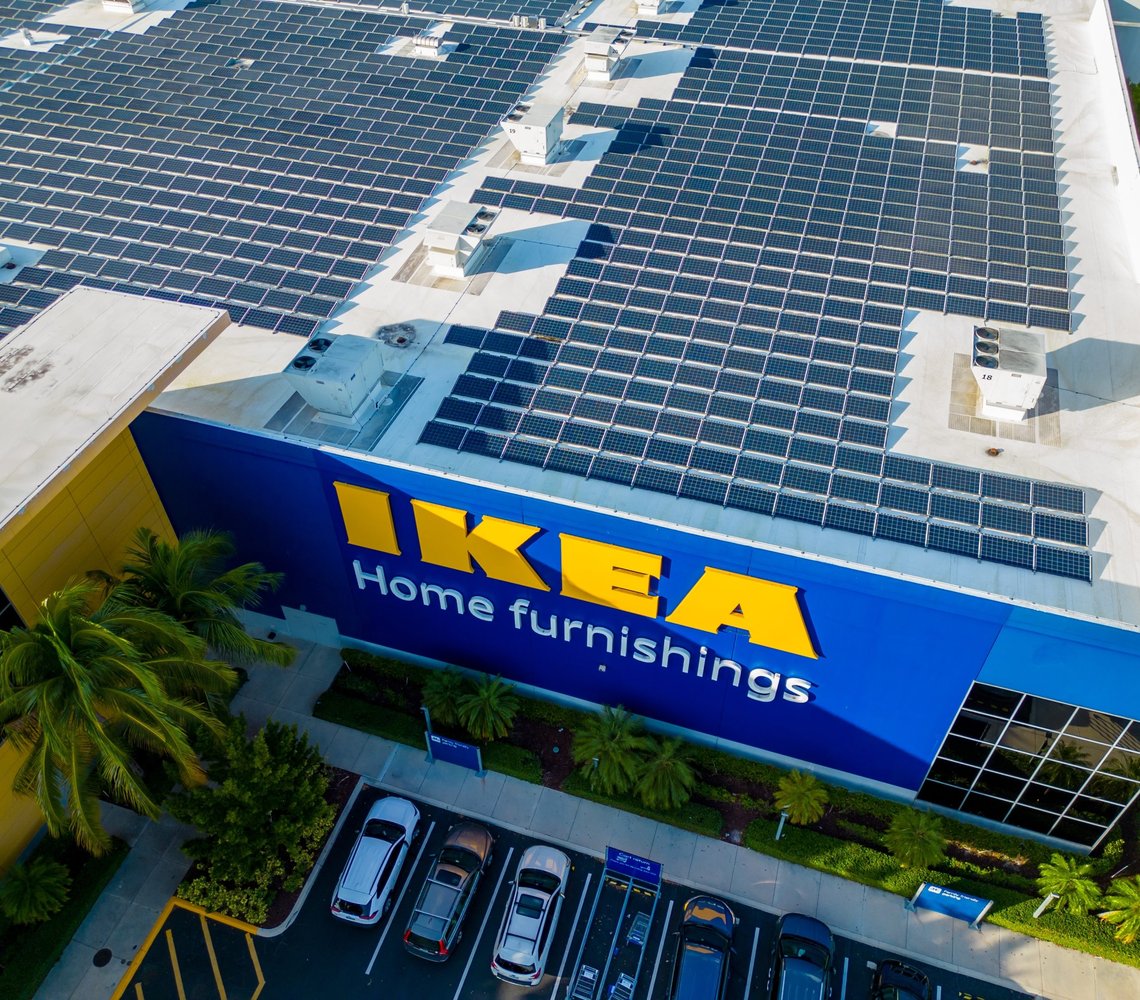
IKEA co-worker standing on rooftop solar panel installation with blue sky and IKEA sign.

Climate & Nature

At IKEA, we are guided by our vision to create a better everyday life for the many people. A better ​planet is a better home for us all. To live up to this vision in an increasingly complex world, we must ​play our part in tackling some of the big challenges facing humanity. ​With our size and reach, we have a big responsibility – and many opportunities – to make a positive ​difference to mitigate the worst effects of climate change and to approach the interrelated crises of ​nature and biodiversity loss, water scarcity and resource scarcity holistically.

Creating a better future

We know we have a huge responsibility – and many opportunities – to make a positive difference on climate change. As stubborn optimists, we believe that we can create a better future.

There are many existing solutions to tackle the climate crisis, but we urgently need to accelerate action. This can offer new opportunities for job creation, innovation, economic growth and reduced energy costs. And we’re proving that it’s possible to reduce our climate footprint while increasing our revenue. Since our baseline year 2016 we have reduced our climate footprint in absolute terms by -30.1% across scope 1, 2 and 3, while growing our business by 23.7%*. We have achieved these reductions primarily through implementing carbon saving measures, such as renewable electricity sourcing and enhancing energy efficiency, however, changes in our business operations and sales have also contributed. We will also support renewable electricity capacity on the grid by investing 7.5 billion EUR by 2030 into offsite renewable energy and supporting technologies, supporting climate mitigation beyond our value chain.

*Data reflects historical performance as of the FY24 ASSR Report. Greenhouse gas emissions data from Inter IKEA Group is used to calculate many of our scope 3 emissions categories. Inter IKEA Group is introducing a new reporting approach in line with CSRD legislation, to improve transparency and comparability for sustainability metrics. This means their data was not available at the time of publication of the FY25 ASSR Report and as a result we are not able to report progress against our full value chain footprint or target for FY25. We will report on our full FY25 scope 3 climate performance in our ASSR FY26.​

We aim to become net zero by 2050

At IKEA, we are committed to the Paris Agreement and to contribute to limiting the global temperature rise to 1.5°C above pre-industrial levels. For many years the IKEA business has been working towards reducing greenhouse gas (GHG) emissions and removing and storing carbon through forestry, agriculture and products. We’ve also been actively driving several initiatives beyond our value chain to create broader societal impact. And as the world continues to evolve, with advancements in science and aligned industry standards, IKEA continues to take action.

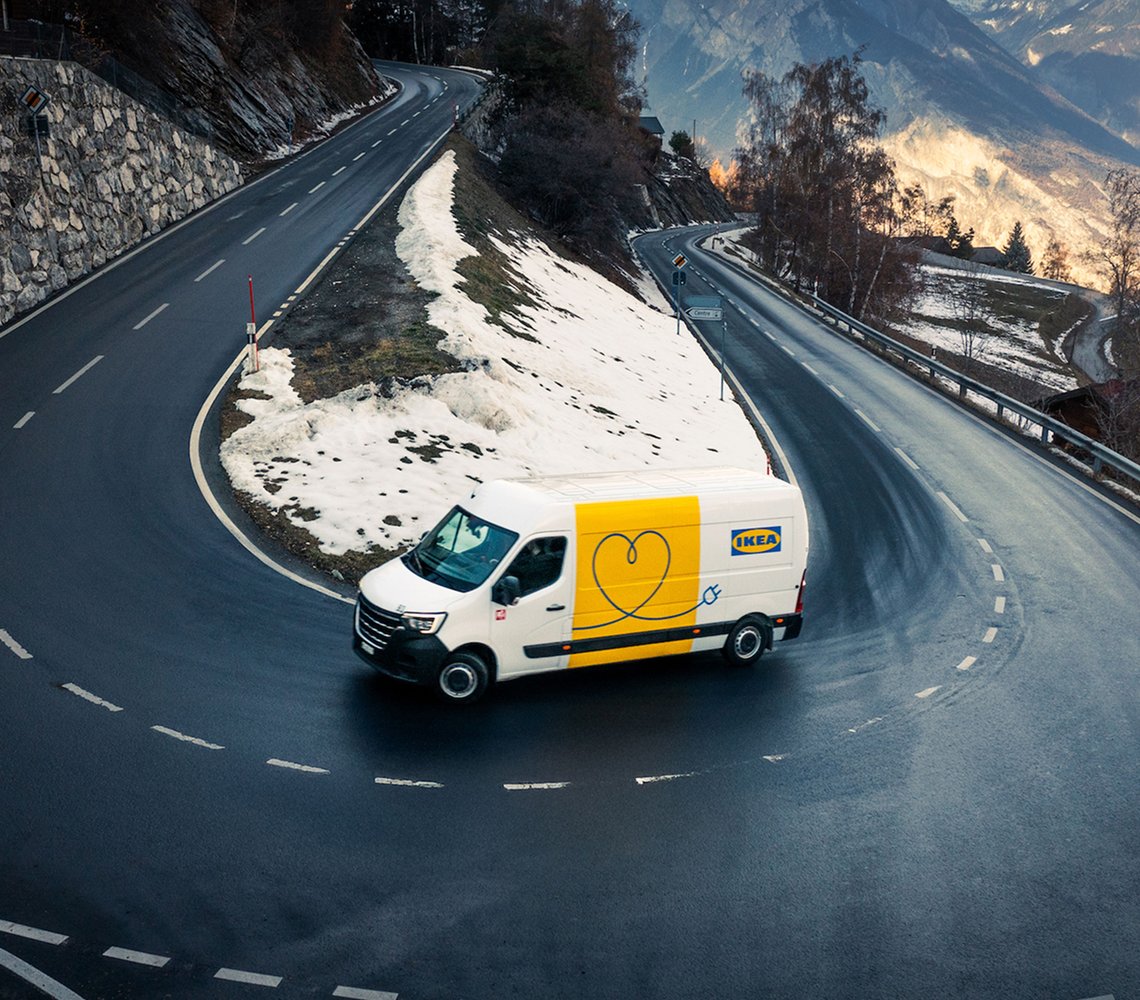
IKEA delivery van driving on a winding mountain road with snow patches and scenic valley views in the background.

Restoring nature and reducing negative impacts

We know the future relevance, success and security of our business is directly linked to how we address the nature crises today. Actions we take through our business, including e.g. how we build and run our facilities (stores, distribution centres, renewable energy sites, and customer meeting points), how we manage our forests and our business practices all have an impact on nature and biodiversity.

In FY25, 94.7% of our forestland portfolio was certified by a third-party certification scheme and 5.3% was undergoing certification. We are focusing our nature work on biodiversity, land restoration, water, pollution, and GHG emissions, as aligned with Science Based Targets for Nature (SBTN) guidance. We aim to better map and reduce our impact and contribute to positive outcomes in the coming years.

Aerial View Of Green Forest Landscape. Top View From High Attitude In Summer Evening. Small Marsh Bog In Coniferous Forest. Drone View. Bird's Eye View.
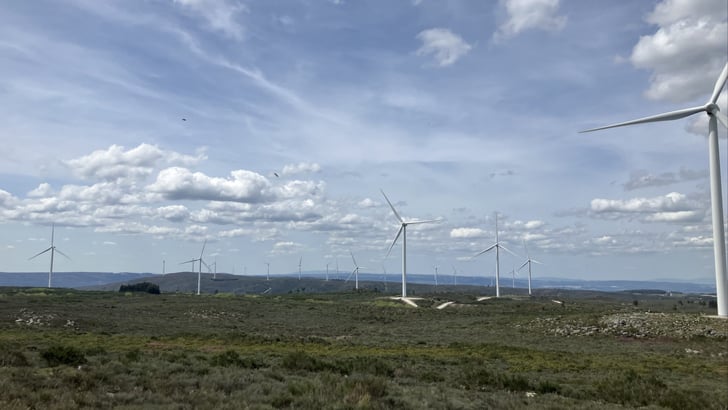
A windmill in nature.

Our climate targets

The graph shows Ingka Group's path to net zero: percentage reduction FY16-FY24 30%, emission reduction by at least 50% in Fy30, emission reduction by at least 90% in FY50.Net zero means an absolute reduction of at least 90% of full value chain emissions (without using carbon offsets) and neutralising the remaining 10% of emissions by removing and storing carbon from the atmosphere.


We evaluate our progress for our climate footprint, based on trusted and science-based standards and benchmarks, and by measuring our scope 1, 2, and 3 emissions.  

Ingka Group aims to reduce absolute scope 1, 2 and 3 GHG emissions by 50% by FY30 from a FY16 base year, and to reach net-zero greenhouse gas emissions across the value chain by FY50.

Our main priority is reducing greenhouse gas emissions across the IKEA value chain, and we are striving to reduce 90% by FY50 without relying on carbon offsets. Any remaining emissions will be neutralised by removing and storing carbon from the atmosphere, which brings us to net zero emissions. These targets are approved and validated by SBTi. Additionally, we will go beyond net zero and go beyond IKEA by contributing to additional reductions in society.

The journey continues

Refurbishing, repurposing, and renovating existing buildings with
better material choices
Phasing out fossil fuels and striving towards
100% renewable electricity sourcing
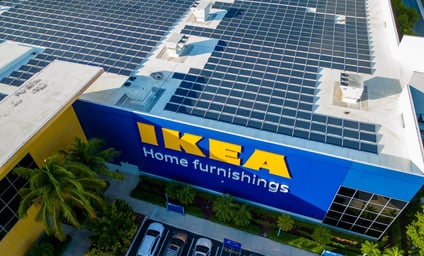
using a mix of solutions including on-site renewable generation (e.g. PV panels on our stores), off-site generation (purchasing renewable electricity from solar and wind farms owned by Ingka Investments) and, where necessary, purchasing renewable electricity contracts from a supplier that can guarantee the renewable source with energy attribute certificates.
Plant-based options in our restaurants
Plant-based hot dog €0.79
Engaging with our suppliers
to set emission reduction targets
Achieving more than
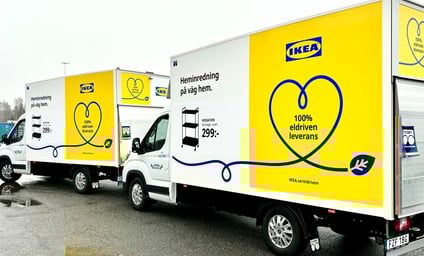
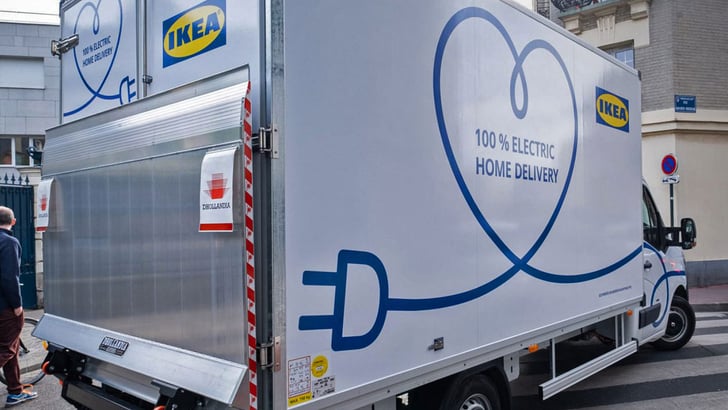
90% of home deliveries made by zero-emissions vehicles by 2028
Increase investments in asset classes that have a
lower carbon footprint
Developing circular services
to enable customers to prolong the life of products
Retrofitting units with
renewable heating and cooling

FAQ

  • What are your commitments and goals for tackling the climate crisis?
  • What are some examples of actions that Ingka Group is taking?
  • What is Ingka Group’s progress in renewable electricity sourcing?