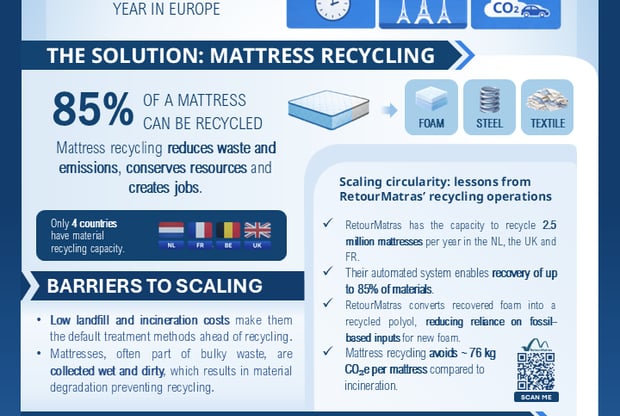
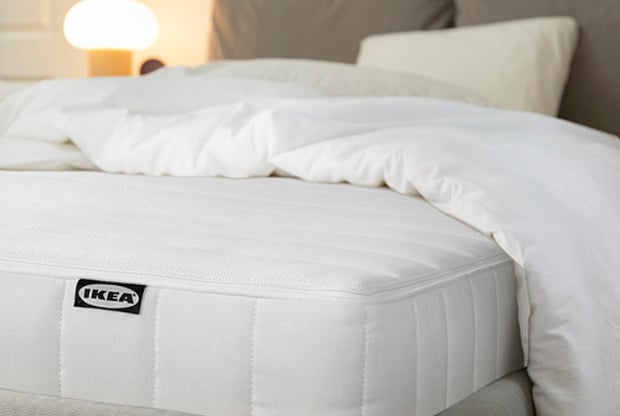
In France, your old mattress doesn’t just vanish, it starts a new adventure. Thanks to IKEA France, RetourMatras and Ecomaison, end-of life mattresses collected across the country are taken apart and turned into recycled raw materials – foam, steel and textile – that help create the new IKEA HÖJEHALL mattress made from 80% recycled materials.
And here’s the interesting part: sustainability doesn’t have to come at a higher cost. Even though recycled materials usually cost more, this loop makes HÖJEHALL more accessible for many more people.
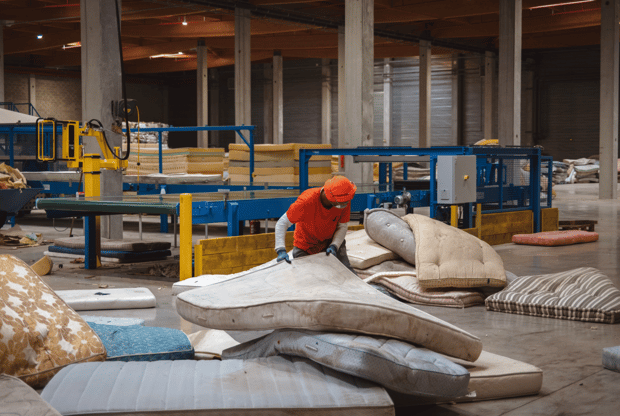
When a customer hands in an old mattress, the loop begins. Ecomaison collects it, then RetourMatras dismantles it and recovers the materials for re-use. The polyurethane foam is sent to their advanced recycling facilities in the Netherlands, where it is transformed into a high‑quality secondary material. Then becomes part of new mattresses, like HÖJEHALL, sold in IKEA stores across France. A simple journey: collected in France, recycled in the Netherlands, returned to France as something new.
How is this possible? Because of the eco‑bonus which is a French incentive from Ecomaison, which is a non-profit producer responsibility organisation on the sectors of home products, that rewards companies for using post‑consumer recycled materials in their products. It helps close the cost gap between recycled and virgin materials retailing prices, making circular production possible at scale.
Last year in France, 5 million discarded mattresses were collected via Ecomaison, to ensure sorting, reuse and recycling. In total, nearly 80,000 tonnes of metal, foam, latex, wool and textiles are processed in order to be recycled or recovered for energy.
From the recycler’s side, the work is complex:
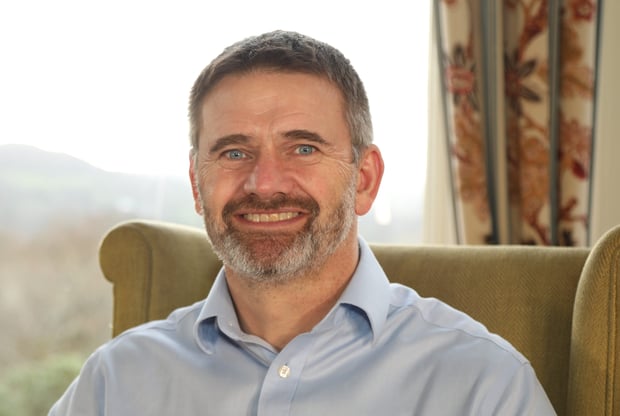
"Recycling mattresses at scale is complex and traditionally more expensive than using virgin materials. Foam, textiles and springs all need to be separated, cleaned and processed to meet strict quality and safety standards. But this loop shows that sustainability doesn’t have to come with a higher price - customers should be able to choose both sustainability and value."– Mark Lewis, CEO, RetourMatras
But there’s a bigger story behind this. Recycled materials still struggle to compete with virgin ones, and price plays a big role. Because recycled inputs often cost more, they’re not used as much as they could be (or need to be) to lower climate impact. And that’s a missed opportunity, because choosing recycled should be the easy, everyday choice.
IKEA supports introducing EU‑wide eco‑modulation criteria to encourage better, more sustainable product design and help companies produce circular products at scale across the EU and beyond. These criteria should build on product-specific rules under the Ecodesign for Sustainable Products Regulation (ESPR) and be supported by clear, harmonised requirements for traceability and verification.
Upcoming EU initiatives, like the Circular Economy Act could create an opportunity to support high‑value recycling, making recycled materials more cost‑competitive, and bringing an opportunity to harmonize these approaches across markets.
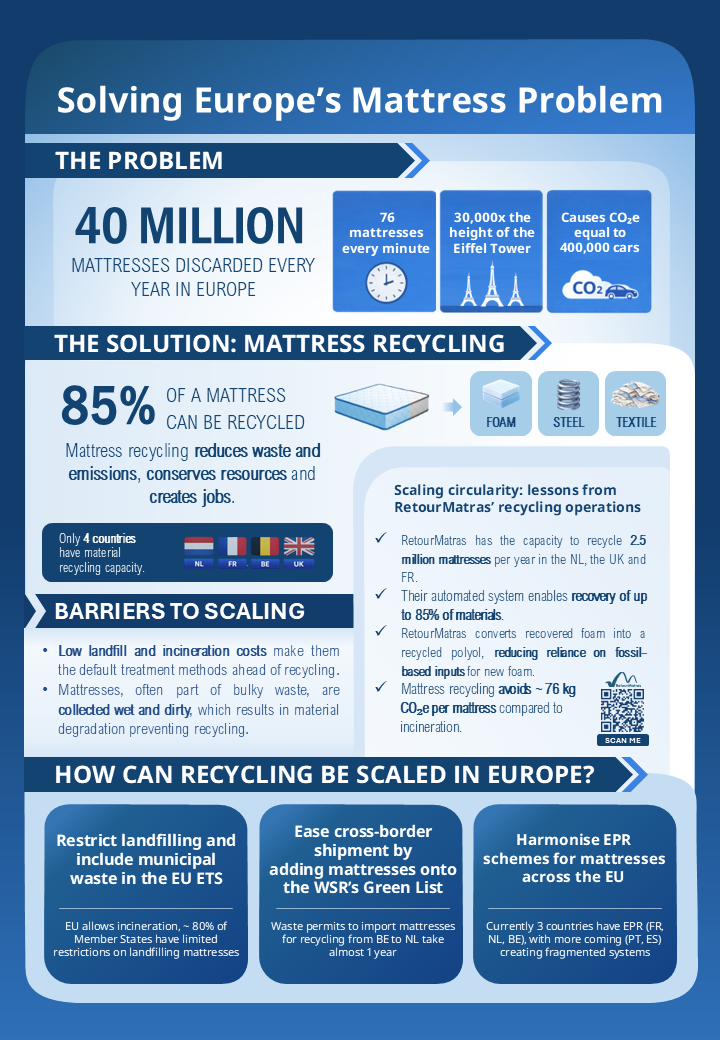
The eco-bonus scheme, introduced by Ecomaison, rewards the use of post-consumer recycled materials and helps reduce the cost gap between recycled and virgin materials, supporting circular production at scale.
From the retailer’s side, the benefit is clear:
"Sustainability comes first for us with products like HÖJEHALL, while we also strengthen resource independence and keep prices affordable for our customers. Eco modulation helps make that balance possible - so more people can choose sustainable options that fit their budget."– Emilie Carpels, Sustainability Manager at IKEA France
And from Ecomaison’s perspective, the mission is simple:
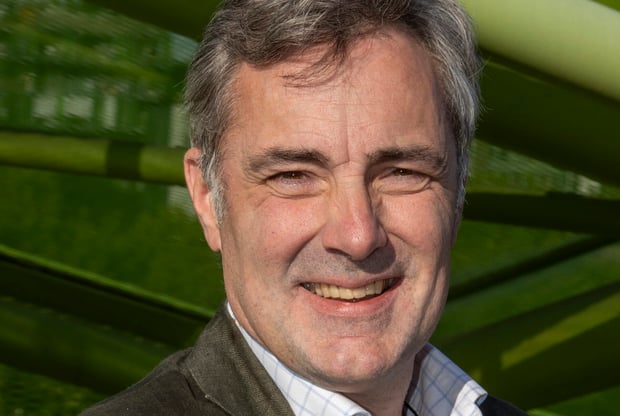
"Our goal is to encourage manufacturers to switch from virgin to recycled materials in order to for them to close the loop at an affordable production cost. This is the guarantee for us to ensure sovereign outcomes for our wastes. It is a win-win partnership."– Fabien Cambon, Head of Purchasing & Innovation at Ecomaison
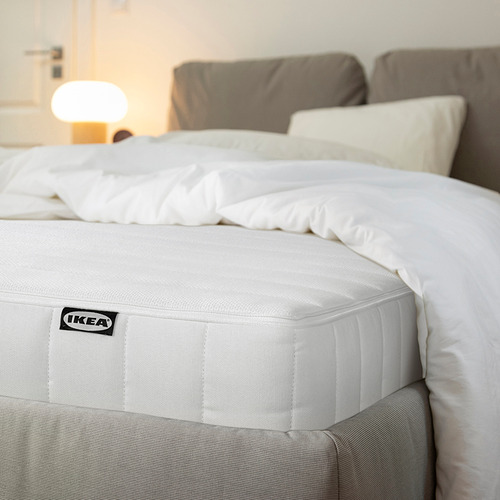
HÖJEHALL shows that a circular system can work at scale. When collection, recycling, manufacturing and the right policies line up, post-consumer recycled materials can return to the market at a competitive price. It’s a model for countries, and for brands, to follow. When more companies design for circularity and more systems reward it, what customers return can become what they buy again, without costing more.
About Ingka Group
With IKEA retail operations in 32 markets, Ingka Group is the largest IKEA retailer and represents 87% of IKEA retail sales. It is a strategic partner to develop and innovate the IKEA business and help define common IKEA strategies. Ingka Group owns and operates IKEA sales channels under franchise agreements with Inter IKEA Systems B.V. It has three business areas: IKEA Retail, Ingka Investments and Ingka Centres. Read more on Ingka.com.
Media enquiries
For further information, journalists and media professionals can contact us at [email protected] or by calling +46 70 993 6376.