I am writing this during London Climate Action Week. Outside, it is 35°C. The irony of debating the cost of climate action while sitting in unusual heat in a British June is not lost on me.
But more striking is how often we are still asking the wrong question.
Too often, the discussion focuses on whether the clean energy transition is affordable. It shouldn’t. The real question is whether we can afford continued dependence on fossil fuels. (Never mind the far-reaching implications from a climate or moral perspective.)
For a business operating across 32 markets, our answer is clear: it is not.
Across the world, investment in renewable energy now outpaces fossil fuels by nearly two to one according to the IEA. Increasingly, it is businesses driving that shift. Not because it is easy, but because it makes sense.
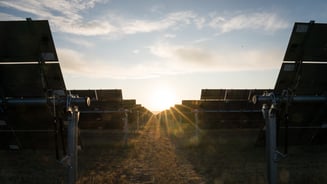
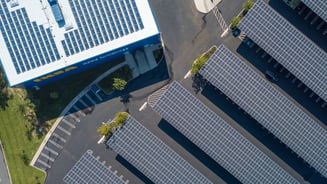
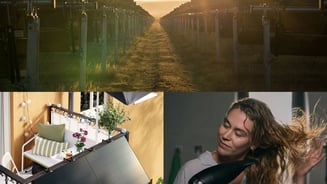
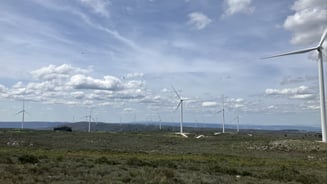
Ingka Group has been investing in wind and solar since 2009. Not just as a decarbonisation tool, but as a long-term operational and investment decision. Today we own 49 wind farms across 17 countries and 26 solar parks across nine. In FY25, 94.8% of the electricity we used in our operations was matched with renewable sources, our investments arm produced enough energy to cover the consumption of 1.47 million European households, and €25.2M was saved in utility costs vs the prior year thanks to energy efficiency improvements.
This is better business performance and climate progress.
For years, we made the case for this transition. Today, the numbers speak for themselves. Decarbonising our business reduces costs, strengthens resilience, and supports long-term competitiveness. It also supports sustainable growth. As I have mentioned before, the CFO should be one of the CSO’s strongest allies. Sustainability and finance are more closely connected than ever before.
Resilience and energy security in an unstable world
We reach our renewable electricity figures through three tiers: on-site generation from rooftop solar covering 7.8% of our consumption; electricity from owned wind and solar assets covering 49.1%; and high-quality Energy Attribute Certificates to cover the remainder. Growing the share of energy we generate, own and operate ourselves remains our strategic priority.
This matters most when markets are under pressure.
When energy prices spiked in 2022, and again this year, many businesses were exposed to price volatility and supply uncertainty linked to fossil fuels. We were not immune, but we were better protected.
Energy from our own wind farms and solar parks reduces dependency on energy price volatility for us and our value chain. This stability shows up directly in our cost base, reduces exposure to geopolitical disruption, and gives us greater control.
This is what energy security looks like today. It is built on renewables. It also brings confidence. The confidence to invest through uncertainty and to lead through geopolitical instability and energy supply shocks.
Fossil fuel dependency is the risk.
Efficiency as a driver of affordability
Renewables are only part of the story. Energy efficiency is one of the fastest ways to reduce both emissions and costs.
Using less energy lowers operating expenses and limits exposure to volatility. Our €25.2 million reduction in utility costs shows this clearly. For our customers, efficiency is also a powerful way to make everyday life more affordable. At Ingka Group we support customers with reducing energy use at home and lowering bills without compromising comfort, by offering energy efficient lighting, and guidance for improving energy efficiency at home.
With cost-of-living top of mind, this matters.
Energy efficiency is where climate action and affordability come together.
A transition that works for everyone
The transition must also work for everyone.
It needs to be both fast and fair, and ensure that the benefits of clean energy, from lower costs to greater stability, are widely shared. This includes supporting communities, investing locally, and helping make energy more accessible and affordable.
Because resilience is not only about businesses. It is about people.
Business is ready but the system must keep up
We are not alone in this.
Business leaders globally have reached the same conclusion. A landmark survey published this week by E3G, the We Mean Business Coalition and the Global Renewables Alliance, covering 1,994 executives across 18 countries, found that 91% believe electrification would improve their energy security, and 84% say it would reduce their long-term operating costs. Crucially, 79% say geopolitical instability has made their own shift to electrification more urgent. This is not a niche or ideologically motivated position. It is the operational judgement of businesses across every major economy, reached independently and under real commercial pressure.
The same survey identifies where the system is failing to keep pace. Seventy-two percent of business leaders say government policies are moving too slowly on electrification, and 69% say businesses are electrifying faster than governments are preparing power systems for them. The top barrier is infrastructure. Grid reinforcement and modernisation need to be treated as a strategic priority. Upgrading the grid is neither quick nor simple, which is exactly why the focus must start now on the mechanisms that lower the risk and incentivise the upgrades required to keep pace with renewable deployment.
This week, alongside other global businesses, Ingka Group signed a collective statement by We Mean Business Coalition calling on governments to treat electrification as a central pillar of economic strategy. The investment appetite is there. What business needs in return is grid infrastructure investment, streamlined permitting, and long-term policy certainty. Those are not ambitious demands. They are the basic conditions required to deploy capital that is already committed.
The global direction is clear
At the UNFCCC climate meetings in Bonn, the COP31 Presidency launched a target to increase the share of global energy demand met by electricity from just over 20% today to 35% by 2035.
The IEA is clear that accelerating electrification with renewables reduces exposure to imported fuel volatility while strengthening competitiveness. This aligns with what we have been doing at Ingka Group for the last fifteen years and what the business community is now saying.
The cost of standing still
Recent years have shown where fossil fuel dependency leads: volatility, uncertainty, and repeated shocks.
Delaying the transition does not avoid costs. It locks in exposure to shocks and instability that we have seen twice in the last four years.
Businesses that invested early in renewables have the most stable cost base today.
The conclusion is simple: The transition is not the risk. Standing still is.
By Karen Pflug, Chief Sustainability Officer, Ingka Group

Notes to editors
FY25 renewable electricity figures: 94.8% of annual consumption matched with renewable sources; 7.8% from on-site generation; 49.1% from owned wind farms and solar parks; 37.9% from Energy Attribute Certificates. Ingka Group owns and operates 49 wind farms and 26 solar parks globally.
About Ingka Group
With IKEA retail operations in 32 markets, Ingka Group is the largest IKEA retailer and represents 87% of IKEA retail sales. It is a strategic partner to develop and innovate the IKEA business and help define common IKEA strategies. Ingka Group owns and operates IKEA sales channels under franchise agreements with Inter IKEA Systems B.V. It has three business areas: IKEA Retail, Ingka Investments and Ingka Centres. Read more on Ingka.com.
Media enquiries
For further information, journalists and media professionals can contact us at [email protected] or by calling +46 70 993 6376.