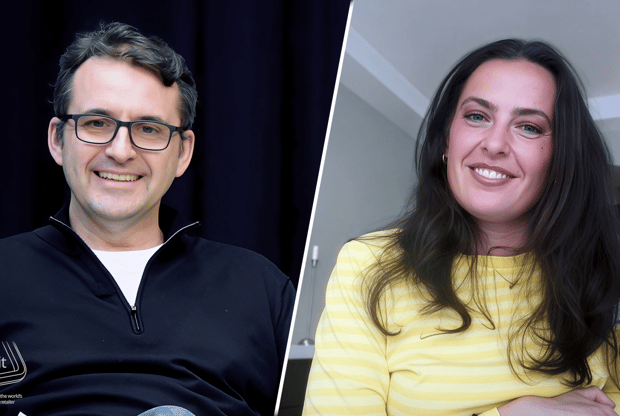
Leadership is often associated with having the right answers. But according to 28-year-old Thea Witzø Johannessen, great leadership starts with understanding yourself. In this episode of Screw It, the Market Manager at IKEA Åsane in Norway reflects on her journey from summer co-worker to leading around 350 co-workers, sharing why self-awareness, trust and continuous learning matter more than having all the answers.
Leadership isn’t about having all the answers
When Thea first stepped into a leadership role, she didn’t feel ready. In fact, she admits she wasn’t even sure she wanted to become a leader until she’d already spent a year leading people. Looking back, she describes her development as a series of small steps rather than one defining moment. Each new responsibility brought new lessons, helping her realise that leadership isn’t about knowing everything, it’s about being willing to keep learning.
The conversations that shape a leader
One of the biggest challenges wasn’t learning how to manage a business. It was learning how to lead people. As a first-time manager in her early twenties, Thea found direct conversations difficult. Giving honest feedback, navigating emotions and making decisions that affected others didn’t come naturally. Those experiences became some of her greatest opportunities for growth. Rather than avoiding uncomfortable conversations, she learned that trust is built through openness, clarity and respect.
“To become a better leader, you need to become a better human.”
It’s a philosophy she has made her own, centred around self-reflection, positive intent and developing habits that help her show up consistently for both her and the people around her. Whether it’s preparing the night before to reduce stress, taking time to understand her own reactions or simply making sure she greets colleagues every morning, Thea believes that small daily actions shape the culture leaders create.
Leading people, not just performance
Today, Thea leads around 350 co-workers at IKEA Åsane. While business performance and sales remain important, she believes the real measure of leadership is helping other people succeed. She also challenges the idea that age defines leadership. Despite often leading colleagues with decades more experience, she’s found that the fundamentals are the same for everyone: people want to be seen, listened to, supported and trusted.
The conversation also explores IKEA’s Leadership by All approach, how to stay calm under pressure and why uncertainty can often become an opportunity for stronger leadership. For anyone curious about what modern leadership really looks like, this episode is a reminder that leadership isn’t defined by a title or position. It’s built through the choices we make, the relationships we create and the person we become along the way.
Listen to the latest episode of Screw It:
About the Podcast
Screw It is a podcast from Ingka Group, the largest IKEA retailer, exploring the “art of assembly” in business, sustainability, and life at home. The series invites global experts and leaders to discuss how we piece together better homes and societies, even when life looks nothing like the manual. From a company that wants people to sit comfortably, but recognises that progress is often uncomfortable, Screw It ditches the corporate script to embrace the “wonderful mess” of building a better future.
About Ingka Group
With IKEA retail operations in 31 markets, Ingka Group is the largest IKEA retailer and represents 87% of IKEA retail sales. It is a strategic partner to develop and innovate the IKEA business and help define common IKEA strategies. Ingka Group owns and operates IKEA sales channels under franchise agreements with Inter IKEA Systems B.V. It has three business areas: IKEA Retail, Ingka Investments and Ingka Centres. Read more on Ingka.com.
Screw It – Episode 10 – Full Conversation Transcript
Paul: Thea, welcome to Screw It and it’s a pleasure to be speaking to you today from Norway. You’re 28, and you’re leading around 350 IKEA employees in the IKEA Åsane store. Norway, is I think the second oldest IKEA market, I think from 1963 I think, and we have around eight stores. Can you just tell me a little bit about how you first started to work for IKEA and also a little bit about your background and where you’re from? Tell us a little bit about your background so we get to know you a little bit more and how you started to work at this big furniture store.
Thea: Yes, I am, as you said, 28 years old now and I started in IKEA 10 years ago, when I was 18. I started in the store located in Trondheim, which is in the middle of Norway, and that is also where I grew up. So, I grew up there with my mom and dad and a big sister two years older than me. And then I started to, you know, earn my own money in a very simple way like a summer temp in Trondheim when I was 18. Yeah. So that is, you know, shortly, that’s where I come from and how did I step into IKEA.
Paul: What does a normal day look like for you in terms of the IKEA store in Åsane?
Thea: That’s one of the questions I get a lot and I find it very tricky to answer because there is not so much something like called a normal day. It has a huge variety of tasks and meetings in it. To give a picture of what I have done, for example, last week: it has been a mix of walking the store, checking if the news are implemented and if I think it looks good from a customer’s point of view. It has been performance check-ins with my team that we do every fourth month to make sure we’re aligned on what the focus is for the next four months. I had my one-to-one meeting with my manager doing the same: do I need support with anything, is there anything that needs to be escalated. Having forecast meetings looking at the budget for next year to see do we have the right balance between top line and sales and cost and so on. It’s a mix of sales and looking at the shop floor and meeting customers and also looking a bit at the economy and budgets for example into the next 12 months.
Paul: When did you realize you wanted to take on a leadership role?
Thea: I didn’t really realize that I wanted to lead people before I was one year into leading people. It was more like the journey to becoming a leader and enjoying it step-by-step. I started when I was 18 and I said as a joke to my family that one day I would be store manager in this store, but to me there was no realistic thinking behind it. I loved my job in IKEA, and I stayed for three years in Trondheim before I moved all the way down south to Kristiansand and then I took my bachelor’s degree there in marketing and management. Still working for IKEA and loving it. When my bachelor’s degree was coming to an end I had to figure out what to do next — keep studying or get a grown-up job. I applied for a leadership academy/program in IKEA to test and see what it was about, I got it and became a leader and after a year I was thinking this is actually quite nice.
Paul: You mentioned the Bloom programme; can you tell me more about that program and how it developed your leadership skills over three years?
Thea: I applied for the program when I was around 22–23. It was new in IKEA and announced as a fast-track program to becoming a market manager (store manager). The goal was to broaden the pool of market managers and increase diversity: younger managers, more female leaders, and broader backgrounds. The program had three separate years with three different jobs/levels: first year learning how to lead people and co-workers, second year designed to learn how to lead leaders, and third year designed to learn how to lead a bigger organization. We were three people from Norway joining and around 100+ globally. The program developed as we went on and adjusted where needed, and after three years you became a market manager.
Paul: You’ve spoken about finding direct conversations hard at first. What do you mean by that?
Thea: That came from my first years as a leader. I found it super hard to have tougher, more direct conversations the first year when I was 23. It was my first full-time job ever and my first leader job; it was overwhelming. I had never learned how to structure those conversations or how to deal with my emotions when saying things that I felt might be rude or worrying about how the other person would react. The first three years in Bloom were learning years because every year I was leading new people with more responsibility. I had to learn along the way how to do the tougher necessary conversations that I had been avoiding privately before becoming a leader.
Paul: Was there a moment in your career where the responsibility really hit you?
Thea: Yes. I listened to another program where I talked about a fire breaking out in a store in Oslo. I was a food manager at the time and also had duty shifts where someone has to close the store and be responsible for evacuation if something happens. It happened on my first shift on a Saturday evening, right before closing, a small fire in one of the locker rooms. That made me realize it’s not all fun and games; it could be the whole building and a lot of people in it. That was a moment where I felt: this is my responsibility to make decisions tonight. There weren’t many other leaders there. It’s a moment I still remember and talk about when managing crisis and reacting under uncertainty.
Paul: You’ve said, “to become a better leader you need to become a better human.” What does that mean in practice?
Thea: That saying came from one of my previous leaders, Bernard, and I shaped it into my own meaning. For me, it means two things. First, always having good intentions in what I do, meeting others with good intentions in my actions and in how I interpret theirs. Second, constantly developing myself: self-reflection, understanding my reactions and patterns, and working actively to put myself in situations where I can succeed. Concretely, I practice habit-stacking (from Atomic Habits) to create routines: same alarm, same breakfast, pack lunch and gym clothes the night before so mornings are grab-and-go. These routines help me be a better person, friend, and leader.
Paul: Do you bring those routines into your everyday work?
Thea: Yes. Both consciously and unconsciously we have a habit of stacking. Morning routine in the store: hang my jacket, grab coffee, walk through the office to say hi. It’s important to make people feel seen and to show I’m here. That creates an important atmosphere for the rest of the day and longer term.
Paul: What’s it like leading people who are a lot older than you?
Thea: The fear was bigger than the reality. I realized it’s not the age that matters but the person, each person has different needs, personalities, experience, life stage, and confidence. Leading a 57-year-old and a 20-year old can have similarities; it often comes down to the situation and prior experience. The biggest difference is sometimes hearing “this is how we did it five years ago.” I acknowledge that and deal with it. Fundamentally, people need to be seen, listened to, acknowledged, and supported to thrive and deliver.
Paul: Does IKEA’s “Leadership by All” approach help with leading older people? What is that approach?
Thea: I love the Leadership by All approach; it has helped me a lot. It measures performance on KPIs but also on behavior; the behavioral part is Leadership by All. You don’t have to have a leadership role to take action and show leadership behaviors. It provides concrete language: for example, “I deliver results” and a list of behaviors that create results. In conversations with new team members, we explore what delivering results looks like beyond KPIs (sales numbers), because behaviors like holding people accountable are part of delivering results. The playbook helps me follow up behavior I see and applaud it or point out where more accountability or celebration is needed. It’s a concrete tool for developing people and organizations.
Paul: How do you handle stress and pressure, especially with sales KPIs?
Thea: I try to be preventative: bring lunch, exercise, sleep, and manage workload. When stress appears I use a structural approach: write down what I know and don’t know; often the unknowns are what stress me out. Then decide what I can do about the unknown and set timelines. Stress is unavoidable, but pressure can be a privilege, it keeps me on my toes and signals trust from others and myself. When sales underperform, I zoom out to look at the bigger picture and work with facts, not emotions: compared to other stores, other countries, trends over 12 months or four weeks, and identify concrete actions.
Paul: Is sales pressure the hardest part of leadership for you right now?
Thea: It’s easier to lead in good times; harder in tougher times. Right now, I’m not mainly worried about sales, we work well with that. I’m more concerned about things outside our control: people visiting the store and the global economy. The hardest part is creating trust and positivism when the world is uncertain, and people face high living costs.
Paul: Do you think this is a time where IKEA’s affordability is an advantage?
Thea: Yes. We’re unique in our offer and range, developing products with price-first thinking. When the economy is uncertain, we call it “IKEA times”, we have many products at prices so low that many people can afford them. We’re trying to be there for people and their homes when private finances are under pressure.
Paul: With online shopping growing (around 30% of customers shop online), do you think big IKEA stores will remain in five to ten years?
Thea: Personally, I think big stores will still be there in five to ten years because they’re invested in and part of our property and investments. But we are developing smaller formats and adapting to consumer behavior: planning studios, grab-and-go, mixed formats. Different countries have different formats. We’re developing a mix of customer meeting points, but I don’t believe the big stores will be gone in the next five to ten years.
Paul: You’ve won awards, do you see yourself staying at IKEA in five or ten years?
Thea: The award was a nice acknowledgement for my work and leadership and for how we lead in IKEA. The jury highlighted daring to jump into unknown situations and leading with values. I love working here; I’ll stay as long as the values live within me and I can make them live in the organization. I’ve had the chance to develop within the company and there are many opportunities, so I can see myself staying and contributing in five and ten years.
Paul: It’s been a pleasure to be together with you today. Thank you so much for your time, good luck with the rest of the year with sales.
Thea: Thank you for having me whenever, thanks for joining us today.
Media enquiries
For further information, journalists and media professionals can contact us at [email protected] or by calling +46 70 993 6376.