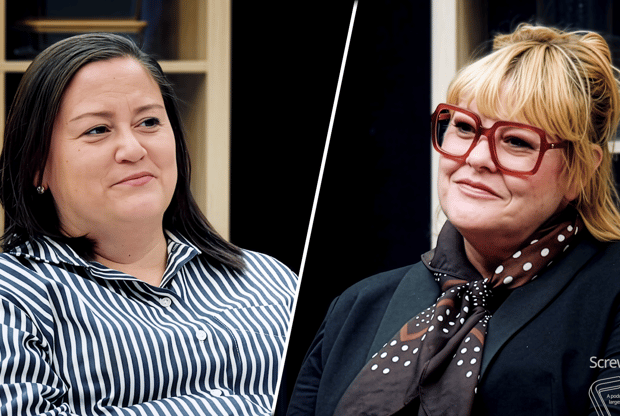
In the latest episode of Screw It, Sara Vestberg, Home Furnishing Direction Leader for IKEA Retail (Ingka Group), explores how digital spaces like “Welcome to Bloxburg” are changing the way younger generations play, create and build relationships with brands.
For many people, home is no longer only something experienced in the physical world. It is also built, decorated, shared, and reimagined in digital spaces.
The episode explores what happens when the world’s largest furniture retailer enters one of the world’s largest gaming platforms, and what IKEA can learn from meeting people in the places where they already spend time.
Meeting the many people where they are
Welcome to Bloxburg is a digital experience on Roblox where players build, decorate, and live in virtual homes. For IKEA, the connection was natural: a platform centered on life at home, creativity and self-expression.
During a two-week test, IKEA introduced a starter kit of products into the game, including a selection of well-known IKEA designs and a surprise extra product requested by the game developer: the much-loved IKEA shark product. Players could unlock the products in-game and use them to furnish their virtual homes.
For Sara, the project was less about selling products and more about learning. “This was just a two-week trial to test the appetite,” she says. “Can we engage a young audience around IKEA?”
The reaction online was encouraging. Players shared their creations, mixed IKEA products with other in-game items and used them in ways the team had not expected – from carefully designed bedrooms and living rooms to more playful, surprising combinations.
From physical store to digital treasure hunt
The test also explored how physical and digital experiences can connect.
In Sweden and Australia, IKEA added an in-store treasure hunt, where visitors could scan QR codes to unlock additional products in Bloxburg. The idea was simple: bring a playful digital layer into the IKEA store experience, while still celebrating what makes the physical store unique – the ability to touch, try and discover products in real life.
That shift matters for brands like IKEA. Younger people are building relationships with brands long before they make their first major purchase. They are experimenting with identity, style, and self-expression in digital environments – and often sharing those creations with others.
For IKEA, this creates a new opportunity to listen and learn.
Responsible testing in new spaces
The episode also addresses the responsibilities that come with entering gaming environments, particularly when younger audiences are present.
Sara explains that IKEA carried out risk assessments before going live and worked closely with the platform to understand potential risks and safeguards. The team also ensured that communication followed local legislation and that there were no calls to action directed at children.
“We truly did our homework before we went live with this one,” Sara says.
The future is both physical and digital
While digital spaces are becoming more important, Sara does not believe they will replace the IKEA store experience. Instead, she sees the future as both physical and digital.
The physical store is still a place for discovery, inspiration and tactility – where people can touch, try, squeeze and experience products in real life. Digital spaces, meanwhile, offer new ways for people to play, experiment and imagine what home can be.
As IKEA continues to explore new ways of meeting people, the Roblox test offers a glimpse into how life at home may be imagined by the next generation – in their physical kitchens and living rooms and in the digital worlds where they already create, share and belong.
Screw It is a podcast from Ingka Group. New episodes are available on Spotify.
About the Podcast
Screw It is a new podcast from Ingka Group, the largest IKEA retailer, exploring the “art of assembly” in business, sustainability, and life at home. The series invites global experts and leaders to discuss how we piece together better homes and societies—even when life looks nothing like the manual. From a company that wants people to sit comfortably, but recognises that progress is often uncomfortable, Screw It ditches the corporate script to embrace the “wonderful mess” of building a better future.
About Ingka Group
With IKEA retail operations in 32 markets, Ingka Group is the largest IKEA retailer and represents 87% of IKEA retail sales. It is a strategic partner to develop and innovate the IKEA business and help define common IKEA strategies. Ingka Group owns and operates IKEA sales channels under franchise agreements with Inter IKEA Systems B.V. It has three business areas: IKEA Retail, Ingka Investments and Ingka Centres. Read more on Ingka.com.
Screw It episode 5 – Conversation transcript
Dani: Hi, Sara. It’s a pleasure to have you here today. Thank you for joining us.
Sara: Thanks for having me.
Dani: So, the reason we’re here today is we’re going to talk about Bloxburg, the popular experience that I know is your baby. Before we start with all these different questions, we have around it, tell us a little bit about what Bloxburg is, how it fits within the Roblox experience and what IKEA is doing in it.
Sara: Roblox is one of the biggest gaming platforms in the world. Within Roblox, you have different games and experiences, and Bloxburg is one of them.
Bloxburg is the biggest home furnishing interactive game in the world today, where you build homes, draw your house, work with architectural features, decorate your house and put furniture in there to really express your style and preferences.
Then you can interact with your friends, invite people to their home, do your work there, and live your life there. That’s also why we thought it was a great fit for IKEA. Home furnishing and home furnishing – that is what we do.
Dani: That’s excellent. It’s interesting because I’ve played with Bloxburg a little bit now because I’m so interested in it. It really has become a creator economy.
Before 2021, when the whole concept of the metaverse exploded, we saw brands like Gucci test it with an Italian garden and then go full force. You have Nikeland out there. But I think it would be interesting to understand from an IKEA perspective.
We’re now in the furniture area. We’re there to design, but you’re not really putting a product digitally and then asking people to come to you, right? You’re really going to where people are creating.
Sara: For sure. One of the things we stressed during the process was to be where people are. We have so many touchpoints and versions of ourselves — online and offline — and usually we want people to come to us.
This time, we wanted to test how we can actually be where people already are.
Like I mentioned, Bloxburg is all about home furnishing, so there was something in there where we thought: this could be a good match for us, to enter a few products.
What we did was put in a starter kit of products, basically, so we could test if there was interest in IKEA and our great design in there.
Dani: That’s interesting. And then the other question I have is: why now? We know it started around 2021, we know it picked up pace and then died down a bit. What was the decision factor to say, okay, now is the right time for us to come in?
Sara: Gaming is not a new thing. It’s been around for a long time, and it’s becoming more popular. It actually started with watching my kids. My daughter was playing a lot, and I was looking over her shoulder thinking, what are you doing here? This is interesting.
It was all about home furnishings. Since I have been working with home furnishings for so many years, it caught my interest. They were creating their own houses and homes, building kitchens, bedrooms, living rooms, swimming pools, and all these things in the game.
That really caught my interest. Then, of course, it took some time to convince people within our organisation because this is so new to us — to be in a gaming environment. Finally, we managed to pull the team together and create this test.
Dani: You mentioned something really important: usually people come to us. That is what I mentioned about this creator’s economy. It is not new, but it is new to us in the sense that it’s an experience. People are showing their self-expression. It’s a community. They’re building their identity, and we can be part of that.
It’s a different idea than giving someone a product and saying, come to us and purchase.
Sara:
For sure. You can also tell it’s not only through the home furnishing of your house, the building, and those features. It’s also the way you create your own avatar.
You can have your own Sara in the game with the features you want, the way you dress or act. That’s self-expression all the way. You can also be around different types of diversity in the game as well.
Dani: Tell us more about the experience itself. We know it was a pop-up and there was an activation. From what I understand, one of the products was the shark – the famous shark that we all love. Tell us a little bit about how the pop-up worked and what the activation was.
Sara: Since this was all new to us, we decided to do a drop-in, drop-out campaign. We had a two-week campaign at the beginning of this year where we launched a starter kit with six products, plus one.
The plus one was the new shark from IKEA. That was actually the wish from the game developer: “Can we please have this shark in the game?”
When you entered the game, you met an IKEA co-worker wearing a yellow IKEA uniform. We also had balloons outside the furniture store and an activity podium in the furniture store in the game.
The co-worker said, “Hello, IKEA is here,” and then you got to see the different products we put in the game. You could unlock the products in the game. Once you interacted and unlocked all six, you also got the seventh.
That was really cool to see – the engagement from people. We had a lot of engagement because you could see how many people unlocked the products.
Dani: That really is neat. I think the other reason this is fascinating is the mix between the physical and digital world. During the activation, for example, I heard that you could put a QR code in the store that then takes you to the game. Tell us about that connection between digital and physical.
Sara: We also want the IKEA store to be where you actually get the best experience. We have everything there. We have people with knowledge, interiors and all of the range. You can touch, try, and squeeze the product.
So, we wanted to add a physical feature to the whole experience as well.
With the six products in the game, we also added four more products if you went to the store — like a treasure hunt in-store. In Sweden and Australia, which were the test markets, you could go and scan those codes and get some extra products.
I thought that was a fun anecdote about the whole project. We didn’t have the capacity to make every QR code burnable or individual, so we just hung them up in the store. Then it exploded on TikTok afterwards, with people asking, “How can I get all of these QR codes from Sweden and Australia?”
People went wild online, creating tutorials on how to use a Swedish VPN to get hold of these products. The codes spread to the rest of the world.
But that showed fascination and interest. We decided not to be sad about the QR codes spreading. It really proved there was a huge appetite for the brand and the products we have.
Dani: Was it really hard to pick what products?
Sara: Yes. I don’t know exactly how many products we have in IKEA. And now we were supposed to pick around ten. That was a challenge.
It was also connected to designers and contracts. This is a whole new arena for us. It’s not like we planned to put our products here when we started the journey.
So, we needed to look at what was trending on TikTok, what seemed to be the timing, and whether we had any new cool things. We wanted to prove that we are keeping up with what’s out there.
Dani: You mentioned exactly the TikTok trends we see. Of course, Gen Z and Gen Alpha – understanding what they want to see is so important for this type of game because they’re there.
Sara: For sure. I have a lot of questions like, “Isn’t this too childish? Is it for kids?” But the game is quite advanced. You need to be at a certain age to be able to create your own house. That’s not something you do just like that with a three-year-old brain.
Dani: And you have parental controls, right?
Sara: Yes. That is controlled within the gaming industry and is increasing. First of all, it is always connected to legislation around social media and gaming age limits.
Also, in the way we communicate, we didn’t communicate with small children. Of course, you design for different age groups, but mostly those who use Bloxburg and can operate a home on their own in the game.
I have two daughters. I don’t know how many times I’ve redone their homes or rooms in our home. It basically needs an adjustment every six months. Now they want it white, now they want it pink.
Dani: Do you think they use the digital space to actually design their rooms, or is it more to play?
Sara: I think it’s both. If I look at my daughters, maybe they have been influenced because I’ve been working with furniture for 25 years. But they have made replicas of the house we live in and started furnishing their own rooms.
I think it’s both. It’s a common trend in the game to make a replica of your own room or the house you live in.
But when you look at the creations people make in this game, it’s amazing. It helps you visualise your dream home. It’s fantastic.
Dani: It is a great platform. One of the other fascinating parts is that in 2021, when the concept became so big for brands, Gucci had a virtual product that resold for more virtually than the actual physical bag.
That was an important point where other brands said, okay, people are buying digitally and virtually.
How does a company like IKEA sell physically within that platform versus virtually? Or would you focus more on virtual products where people buy virtual products?
Sara: For now, in this test, we didn’t do that kind of connection. The online-offline purchasing features exist, but we just wanted to show people that we can do this. We are here.
We always want to be a brand for young people – a brand they can afford. One thing that was super important for us in the game was affordability, because we are the affordable brand.
The in-game currency is called Robux. Our products shouldn’t be more expensive than the other ones. We even asked, can we give them for free? But then, on the other hand, that is the whole thing with the game. You work and do certain services to earn money in the game, so it is a living experience.
We needed to charge the products in the game, but it was really fun to see the number of products that were unlocked.
Dani: Before we get into the insights you got from the game, how do you incorporate affordability and that rich 80-year-plus life at home experience into a platform like this, even for a two-week trial?
Sara: This was just a two-week trial to test the appetite. Can we engage a young audience around IKEA?
Life at home and home furnishing knowledge is the next step. If we can prove the success of this, maybe we can do something longer, with more products. Maybe we can even add some of our home furnishing knowledge from throughout the years into the game.
This was more product-focused and design-focused. Then we allowed gamers to do whatever they wanted with our range.
We’ve seen sofas stacked on top of each other, but we’ve also seen beautiful bedrooms and living rooms created with our products, mixed with other products in the game. That’s how people furnish at home as well. They mix what they already have with something they add.
Dani: That’s what I find most fascinating: what are they doing? Younger generations are building relationships with brands way before they buy. They are in this community and have social experience. They want to play, be there, and socialise. What have you learned from observing them?
Sara: First of all, there is a lot of sharing. When you create something, there is a very tight connection between the platform and social media.
You might record yourself creating your own room and then put it on TikTok for others to see what you have done and learn from your creation. That’s why we saw a lot of different solutions.
During the two-week campaign, there was a huge hype on TikTok, with a lot of videos shared.
Dani: What surprised you? Was there anything in particular?
Sara: The biggest surprise was probably my own learning.
When we pulled the products together, we thought, this was trending there and this was trending there. We pulled together something for everyone. But then, when I saw things coming together, people actually used them together.
I thought, oh, that doesn’t necessarily fit. We have guidelines for how we work with the range — whether it’s a modern style or a traditional style. Suddenly, these things were mashed together.
But that was also nice to know. The most important thing is that the person creating it feels it looks good for them. That’s the same in a real home. I haven’t decided what your home looks like. You decide.
Dani: This project matters so much in so many ways beyond work. In marketing and advertising alone, many brands are struggling to really understand what Gen Z and Gen Alpha are doing.
It feels like an opportunity to understand exactly what you said: how they’re putting things together. Maybe they’re putting five pieces of furniture together, maybe everything is stacked up, maybe their spaces are smaller. There are a lot of things people are doing now that are important to learn from because that drives consumer behaviour. We need to understand that.
Sara: Yes. I think it is an audience that is not necessarily harder to reach, but different to reach. Different platforms, different arenas, and different touchpoints.
Also, the peer-to-peer or customer-to-customer relationships give you much more credibility. If a gamer creates something with our things, shares it on TikTok, and another gamer sees that, that becomes the difference.
We are not really in charge or directing this in any way from our point of view. It’s really about the creators and every person coming out there.
It was amazing. Some people furnished a room, some used a lot of products, and some filled a whole football stadium with sofas. Whatever they wanted to do.
Dani: What do you think it can help with in the future, not now, but in the future – when we think about what we create for customers?
For example, if we realise these are the colours people are attracted to, these are the items they’re telling us in the game they’re missing — could that affect what we create?
Sara: The whole test and campaign were received very well by the public, gamers, and everyone. There was very little negative feedback, actually, which was super fun.
One of the few negative comments was: “Why can’t I use this colour?” or “Why can’t I recolour it, put this pattern on it or change the design?” Because that is what you can do with the majority of the products in the game.
But with IKEA, we wanted to stick with what you can actually get, because there is a very thoughtful design behind the range. If you make a polka-dot sofa, maybe that is not how we want to come across.
So, we offered our products in the shapes and styles that exist in the range. But that was one of the comments: they wanted more products, more colours, more ways to recolour and more options.
Dani: I can imagine they couldn’t get enough. It’s interesting that virtually you can have a product, and physically you have the real product you want to create. Physically, you want to keep the reality of what the product looks like. But virtually, people want to do so much more with it.
I could see myself wanting to dress it with polka dots.
Sara: Maybe in the future we can unlock those little things within ourselves as well.
Maybe we can offer some tips and ideas on how to hack things. There are options, but we went a little bit basic now to test and try. Then we’ll see in the future if we can do something more.
Dani: You mentioned that you got very little negative feedback, which is great. What was positive feedback?
Sara: That was amazing. I was scrolling through TikTok during the campaign, and I needed to shout out to my 16-year-old at home: “What does this mean? Is this good or bad?”
She said, “It’s good.” They have their own vocabulary.
There were a lot of great comments. You could really see that a lot of people like to hang out there. I think they were just so happy that we finally went there.
It was really about Bloxburg and IKEA being the perfect match. People wanted more products and wanted us to do it again.
That is the beauty of IKEA. They can interact with it in their own way. I think it was an incredible campaign.
Dani: We went a little bit into the child’s safety part. Platforms like this have been known to cause child safety concerns. What safeguards are you putting in place, or how are you tackling this from an IKEA perspective, even if it was just a two-week pop-up?
Sara: We truly did our homework before we went live with this one.
We did a risk assessment, checking the potential or possible risks before we even went live. Then we safeguarded it, of course connected to local legislation.
It is the same as with social media. We never communicated any calls to action to children. It is always for those 18 and above. What we offered was an experience, but a call to action to children did not exist in this case.
We did everything we could have done. We also had a very tight dialogue with the platform and the gaming platform itself, to make sure nothing bad happened. Of course, we want no part of any bad behaviour online. That is not what we stand for.
So, we truly did our homework.
Dani: Is that another reason why you tested in two markets initially and for a short period — so you could test and see?
Sara: There were many reasons why we chose two markets. It was also quite a lot of work because we wanted to have the codes in the stores, like you mentioned. It would have been almost too big if we wanted to do it for every market in the world.
We chose Sweden because of the home furnishing connection here, and we chose Australia because it is an English-speaking country that we wanted to collaborate with and test new things in as well.
But our biggest learning is that it is really hard to go local on a global platform. The comments, the sharing, the way the news spread — that was all global. It is a global platform.
Dani: The lines are not merged anymore. When people are looking on TikTok, they could be in France, Canada – it is global.
Sara: Exactly. For us, that is great learning. That is also why we called this a test: to see if people would respond to it the way we hoped.
Dani: Did you get a lot of questions around when you are going to be in this market or when you are coming to that market?
Sara: Yes. If you call it negative comments, it was: “Why is it only in two markets?”
The thing is that you could actually access our products in the game even if you were in France, Portugal or the US. But it was not branded.
The funny thing is that apparently our design is recognised, because a lot of people found it anyway — maybe through peers on TikTok, or maybe by themselves.
So, the brand and the design are recognisable. You do not have to go there with branding or a logo. Outside Sweden and Australia there was no branding, no logo, but still we saw a lot of interaction. It was a little bit higher in Sweden and Australia, but people found it elsewhere too.
Dani: If we look more into the future and think about how younger generations are continuing to shop, do you think these digital immersive experiences could take the place of physical stores in the future?
We are seeing people buying more online, but we also know that the IKEA physical experience is something on its own that people want to experience.
Sara: I think the future holds both.
We see other brands that go purely online after having been physical, and it is not successful. When they go back and have a bit of a both-and-appointed approach, it proves to be more successful.
Dani: Why do you think they are not successful just digitally?
Sara: I think there is still a tactility feature. You still want to be able to touch, test and try things that you buy.
It is also another experience to go somewhere. You discover things you have not necessarily seen before. It is about browsing in a shop versus online.
We usually talk about impulse behaviour or unplanned behaviour. If you are looking for a bookcase online, you search “bookcase” and see different bookcases. But if you are in a physical store, you browse around and discover things you had not planned for.
It is a totally different experience. You become more open to discovering something new.
Dani: It is also probably about the different user groups and age groups. IKEA customers can be 50, 40, 20 or 30, and then you have younger generations who might be playing more.
Do you think we are going to continue to see a split between digital and physical experiences depending on age?
Sara: Yes, I think so. But I also think people move between channels more than we sometimes realise. It is not only one or the other.
You might get inspired by a game, then go to social media, then visit a website, then go to a store. Or you might start in the store and continue online. The journey is not linear anymore.
That is why it is important for us to understand how people move between different touchpoints, and how we can be relevant in each of them.
Dani:
And what do you think this means for IKEA as a brand? Because IKEA has always been very connected to the physical experience — the store, the showroom, the meatballs, the day out. How do we bring that feeling into digital spaces?
Sara: That is the big question. We do not want to copy the store and just put it in digitally. That would not necessarily be interesting.
We need to understand what people want to do in that space. In Bloxburg, they want to create, play, socialise and express themselves. So, we need to ask: what role can IKEA play there?
It is not about forcing physical experience into the digital world. It is about understanding the behaviour in the digital world and seeing how IKEA can add something meaningful.
Dani: That makes sense. It is not just putting a blue box into a game and saying, here we are.
Sara: Exactly. It needs to make sense for the platform and for the people using it.
Dani: What do you think surprised IKEA internally the most about this test?
Sara: Maybe the engagement is great. We hoped people would like it, of course, but the way they shared, commented, and created the products was really encouraging.
It also showed us that we need to listen more. Younger generations are already creating life at home in these spaces. We need to understand better.
Dani: That is a really important point. Because sometimes we think of these platforms as something separate from real life, but for younger generations, it is part of how they socialise and express themselves.
Sara: Yes. This is where they hang out.
What we have not fully figured out yet is that this is social media for them. For younger generations, we think Instagram, Facebook, YouTube or TikTok are social media. But for them, a platform like Roblox is social media.
That is where they hang out on a Friday afternoon after a week in school. So, the surprise is on us, really.
We are learning that we need to listen, learn, and get to know these young people much more.
Dani: Finally, what are you most proud of so far with this project?
Sara: That we did it.
It was a little bit of a bumpy road in the beginning, and almost all the way to the end. But we did it.
That is what I celebrate most — that we actually made it happen. Thanks to a lot of great colleagues around us, we rolled up our sleeves and decided we were going to do this.
The road can be curvy, but at least we had a goal. We were going to nail it.
Dani: The future sounds great. Thanks, Sara, for joining us today on this episode of Screw It.
Sara: Thank you. Thanks.
Media enquiries
For further information, journalists and media professionals can contact us at [email protected] or by calling +46 70 993 6376.