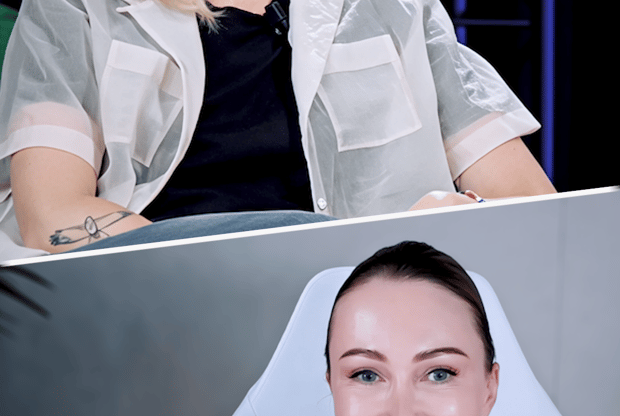
On the latest episode of Screw It, Kas Bordier makes the case that your home might be one of the most overlooked levers for your long-term health. Bordier is the founder of MAVI, a Geneva-based longevity architecture practice that assesses homes against 129 measurable health factors, built on the idea that the places we live shape our biology far more than most of us ever check.
Bordier grew up in Poland, then still under communist rule, born prematurely, with an older sister diagnosed with epilepsy as a child. Her mother, a teacher, raised both daughters largely on her own. It gave Bordier an early, personal sense that health cannot be taken for granted, and that the spaces we live in are not neutral.
After years working in health and longevity, Bordier moved into what she describes as her dream apartment in Singapore, with the sea view she had wanted since childhood. Her health declined anyway. She felt foggy and low on energy, and doctor after doctor told her she was fine. Eventually one doctor suggested testing for toxicity. It turned out there was mould growing between the walls of her apartment, invisible from the outside.
That experience sent her looking for what else in an ordinary home might be quietly working against people’s health, even when everything else, including diet, training and supplements is done right. MAVI now measures homes across ten domains and 129 factors, starting with light, air, water, acoustics, temperature and humidity.
Light is the one Bordier says people underestimate most. The body uses light to set its internal clock, and poor or inconsistent light through the day can leave people in a kind of permanent, low-grade jet lag. Indoor air is often more polluted than outdoor air, and something as simple as opening a window or running a fan can shift that quickly. Water quality varies by city and by building, and a basic countertop filter can make a real difference. Humidity between 40 and 60 percent matters too: much lower dries out skin and airways, much higher invites mould.
Mould, she says, is the single biggest thing to rule out first. She recommends testing for it every few months. It is cheap to check for and easy to miss, since it often grows somewhere you cannot see.
MAVI’s best-known project so far is a partnership with interior designer Kelly Hoppen, built on the idea that a healthy home does not have to look clinical. Bordier credits Hoppen with pushing her to keep going in the early days, when architects and designers dismissed the science behind the work. Bordier has also contributed to XPRIZE Healthspan, the global competition focused on healthy ageing, where conversations with scientists and judges helped convince her that the home itself was an overlooked piece of the longevity picture.
Her advice for anyone who cannot afford a full renovation: start with light bulbs suited to the body’s circadian rhythm, a combined air purifier and humidifier for the bedroom, and if possible, a basic reverse osmosis filter for drinking water. None of it requires a renovation budget, and all three can be done in a weekend.
Listen to the latest episode of Screw It:
Screw It – Episode 14 – Full Conversation Transcript
Editorial note: this transcript has been cleaned up for readability, filler words, false starts and repeated words from the original captioning have been removed, and some clear transcription errors have been corrected. Wording and content otherwise reflect what was said as closely as possible.
Kat: Welcome to Screw It. I’m joined by Kas, the founder of MAVI, the longevity design company. We spend 90% of our time indoors, and we’re talking about how that can negatively affect us and what can be done to improve the quality of our homes. I hope you enjoy it. Thank you so much for joining me today. We’re going to talk about longevity, architecture, and design. But before going into that topic, tell me a little bit about your background and what brought you here today.
Kas: Yeah, so without telling the whole life story, it actually started with how I grew up. I’m a child of the 80s and 90s, growing up in Poland, born when it was still a communist country. We were going through that transition from communist to open economy, which is bumpy anyway. But the most important part of that context is that I was born prematurely, and my health wasn’t exactly great. On top of that, my older sister got diagnosed with epilepsy when she was a child. So, my single mum, who is an incredible human being, was handling two daughters who were not in pristine health, with very little means, because she was a teacher in communist Poland. Thank God she was a teacher, because we were assigned a small apartment, so nobody really questioned whether we could afford to live somewhere. When I talk about longevity, it has nothing to do with living forever. To me, it means every day you wake up, your brain is sharp, your body is strong and full of energy, and you’re not in pain. That is true longevity, and I just want us to be in this for as long as possible. Can I tell you a personal story? I spoke to my mum yesterday and mentioned I was speaking today, and she said, isn’t it IKEA how it all started? I’d never connected those dots until she said it. In the 90s, IKEA was one of the first stores that opened in Poland, near where I lived, in a little village close to Żyrardów. I would go to IKEA with my friends and just look at the idea that you could assemble a room and bring colour to it. Nothing like that existed. We would go and hang out there for hours. The fact that we’re speaking today, honestly, is a bit of a full-circle moment for me, because that’s really how my obsession with living by design, not by default, started.
Kat: So, you grew up in Poland, health conditions weren’t great, and that somehow shaped your thinking when it comes to design. How did you move away from that environment?
Kas: For me, as for probably most kids who left Poland, education was the way out. I was a very studious kid, and when the country opened up enough to send students abroad, I was one of them. I got very lucky, and that was also the first time I saw that your postcode can be a determining factor in your life, but it doesn’t have to be. I left for Austria. Vienna changed my life, then I moved to London, and from London I moved to Singapore. When I think of how it all started, I really thought when I was in Singapore that I’d made it, because I didn’t have to worry about paying rent any more. My sister’s condition had stabilised, and she was having a beautiful life doing things she was told she wouldn’t be able to do because of her health. I had a vision board as a kid to one day live somewhere with a view, which for me was the epitome of luxury. So there I was in Singapore, in a stunning apartment with a sea view, thinking life is good. And over months and months I was getting progressively worse, energy-wise and health-wise. I was getting foggy, and it really hit me hard, because at that point I already worked in what we’d now call longevity, or healthspan — that was before people talked about longevity the way they do now. I had access to great doctors and tests, and everyone told me I was okay. I just didn’t feel okay, which was both frustrating and concerning, because it took me right back to not feeling well as a kid. Feeling sick again, and not knowing why, is a very frightening situation. So I went to yet another doctor, who told me I was okay, and I lost it. I was crying, saying, you cannot tell me I’m okay when I have no energy and I can’t get through my day normally. And she said, why don’t we test you for toxicity? Which I thought was ridiculous, because I’m a pretty healthy person. But we did it, and we found mould in my body. I went down the rabbit hole of why, when I’m healthy, I detox, I train, I do all the right things. It turned out that in my beautiful, picturesque apartment, I had mould growing between the walls. It wasn’t even visible. I went to my landlord and said, there’s mould, what are you going to do about it? And, quite politely, he said: I don’t have to do anything. There is no law for this. If you don’t like the apartment, you can leave. My Polish DNA kicked in, and I thought, that cannot be the reality. That’s really what pulled me into this. If I missed this, how many other people are missing it too, even doing all the right things with training, food and supplements? The reality was that my bedroom was making me sick. I thought, let’s find out what else is out there, and how big the impact really is. Over the next few years I learned it has a massive impact on our longevity, vitality and energy levels. But that’s really how it started — with pain, suffering, tears and frustration. I thought there had to be a better way, and now we’re learning that there is.
Kat: And it’s not easy when it comes to your overall health, because quite often if you go to see a doctor you’ll be told it’s stress, or something else, and it’s not very common to have a doctor say, let’s test for toxicity. And that’s just one of the aspects. There are 129 different markers that you look at at MAVI. Tell me a little about MAVI and what you look at when you come into a home.
Kas: We went out to a lot of incredible scientists and longevity doctors and asked: what in the built environment truly impacts our health long term? From that, the initial list was around 150 points. Anything we couldn’t find solid scientific evidence for, we dropped, because it’s hard enough to talk to people about their home without adding things that aren’t strongly grounded. That’s how we landed on 129 points. Simplistically, when I enter a room, the first thing we look at, both by assessing the space ourselves and having our team take measurements, is light. It’s the most underappreciated influence on our long-term health. We understand light therapy and red light and so on, but we rarely check the light quality in our own homes day to day. The way our biology works, your body knows what to do based on the light hitting your eyes. If you maintain poor light quality throughout the day, you get out of sync with your circadian rhythm — something we call social jet lag, meaning you don’t have to travel to get jet lag. The second thing we measure is air quality, on two fronts: what’s happening outside the home, and what’s happening inside. For most homes we see, indoor air is more polluted than outdoor air. The other issue is simply that air doesn’t move. Forget fancy filtration — just getting air moving in the house does a lot of good. Open windows, install a simple air purifier, especially in bedrooms, or just run a fan. That alone moves the needle massively when we measure air quality over the course of a day. Water is another big one. Every drop of water that reaches you, through food, drinking water or your shower, affects your health long term. We test the city water supply your home is connected to, then suggest solutions based on the result. It can get complex, but a simple, powerful fix is a countertop reverse osmosis filter for your kitchen. That alone can change your skin, your recovery and your sleep. Acoustics is another one — it’s underappreciated how much acoustics affect cortisol levels. If a space isn’t acoustically designed well, you’re in a constant, low-grade state of alert, which isn’t what you want for long-term health. And we look at temperature and humidity, which is really where it all started for me. For your body to be happy, humidity needs to sit between 40 and 60 percent. Any lower and you struggle to breathe and your skin gets dry. Any higher and mould, viruses and bacteria thrive. Keeping humidity in that 40 to 60 percent range in the space you spend most of your time is key. We start with simple measurements, and if something isn’t right, we go deeper with more professional equipment.
Kat: It’s so interesting, and I think we spend around 90% of our time indoors. I think it was Bryan Johnson who said recently that he hadn’t been looking at his own immediate environment, and then discovered there was toxic turf in his backyard. Even people who are dedicating their whole lives to longevity might not know about the toxins in their homes. What’s the number one toxin people should watch out for?
Kas: The most important thing is making sure you have no mould. Everything else you add on top won’t give you the right benefit if mould isn’t fully removed. Mould comes down to humidity, timing and temperature, so we always check for those three factors first.
Kat: How do you know if there’s mould in your house? Are there simple tests you can do yourself?
Kas: Yes. There are now plenty of companies around the world that can come and do professional testing, and there are home test kits you can order before deciding whether to bring people in — a bit of soft self-testing that will tell you whether it’s worth investigating further. The problem is that most of us either never test at all, or we only test once something bad has already happened, fix it, and never test again. Every home we deliver comes with an aftercare playbook, and we suggest testing for mould every quarter or every six months. It’s cheap to test, but you don’t want to be living with mould at all — and because leaks happen, or a neighbour’s flooding affects your walls, you can end up living with it without knowing. It doesn’t sound exciting, but if there’s one thing you should test for, it’s this.
Kat: You lived in an apartment with mould yourself — are the health effects reversible?
Kas: I’m not a doctor, so I can only tell you how it was for me and for a lot of our clients. When mould enters your body it’s tricky, because it depends on what else is going on for you — some people are affected more than others, so treatment really has to be customised to the person. If anyone tells you a treatment removes mould 100 percent from your body, I’d be sceptical. Go to a good doctor who understands toxicity and the different protocols available. For me, it started with supplementation, then ozone therapy, then blood and plasma cleansing. It was a process that took almost twelve months before I really felt back to myself — but the best twelve months, because it taught me how important that is. When you don’t have the energy to show up fully, whatever your life is, it isn’t being lived fully.
Kat: How long has it been since you started MAVI?
Kas: I started working on the framework before it was a business — our first project was in 2024, so I’d say two and a half to three years including the year spent figuring out what to actually measure, and checking whether anyone else was already doing this properly. It’s been a bumpy road, partly because there’s an interesting psychological hurdle in suggesting to people that their home, which for most of us is the safest place we know, might be working against them. I’ve had to learn to be a lot more gentle with my delivery — my Polish directness doesn’t always allow for that. It’s a paradigm shift, questioning something we’ve taken for granted, in the same way people had to start questioning ultra-processed food just because it’s on the market.
Kat: What was the moment everything clicked, and you thought, I need to launch MAVI?
Kas: First was the thought that if I’d missed this, a lot of other people probably had too. But it really clicked when I joined the XPRIZE Healthspan competition as a contributor. It’s the biggest competition in the world for healthy ageing — not about reversing anything or staying young forever, but about ageing well, staying sharp, strong and full of energy. I was sitting with some of the judges, who are right at the top of the longevity field globally, and asking them, what am I not seeing, why isn’t anyone talking about the home? Two things came up. One was a project the judges were working on around the exposome — everything we’re exposed to over a lifetime, and how those exposures affect our long-term health. The other was the statistic that we spend around 90% of our lives indoors, and most of that indoor time is in our own home. Every longevity expert I spoke to agreed that the home matters far more than people think. I was also my own case study — I was doing all my longevity screening and therapies, and it wasn’t working, because my home wasn’t part of the equation. You can do everything right outside the home, but if your home isn’t optimised for your biology, it’s like swimming upstream. We want the external longevity work and the internal, home-based longevity work to come together. Fixing your home to me is probably the most undervalued health intervention you can do. We have countless examples of clients who fixed their bedrooms for optimal sleep and saw health issues disappear. I can’t claim we fix things directly — what I believe, and what I hear from clients and their doctors, is that as the toxicity load and stress on the body go down, and the environment supports rest, the body gets a real chance to recover, instead of having to fight when it’s supposed to be recovering.
Kat: What are some quick fixes people can do? An obvious one is removing candles from the house. I’m personally a fan of having a TV in the bedroom, which I know is a big no-no. What else is an easy fix?
Kas: On candles — I’m not saying no to all candles, just read what they’re made of. If it’s full of ingredients you’ve never heard of, it’s not good for you, and burning it releases that into the air you breathe. Remove it where you can, though there are good brands that give you the same effect without the health cost. On TVs in the bedroom — even for me, it’s tricky, because I’m married and you have compromises. What my husband and I did was remove the TV but keep a small projector, which is better because of the electromagnetic field a TV gives off, plus the blue light at night. The projector is tiny — we bring it in when we want to watch something and remove it afterwards. Anything within about a metre of your head while you sleep matters. Your mattress matters — a lot of traditional mattresses use off-gassing chemicals, which isn’t good for you, so look for an organic brand and read the ingredients. The paint on your walls matters too — use a non-toxic version. There’s a lot of innovation in this space now. Three years ago it was hard to find budget-friendly options; now, for example, there’s a lime-based graphite paint that absorbs CO2 from the room, helps regulate humidity, and improves acoustics, all in one product — not to the level of detail we’d go to, but better than 98% of homes we’ve seen. Circadian lighting used to be something only very expensive homes could afford. Now there are brands offering it at the same price point as a normal light bulb, properly optimised for your biology. If nothing else, get your face in front of sunlight first thing in the morning to kick-start the right processes in your body, and if you can, replace flickering LEDs with healthier lighting. One more thing — there’s something called the Lombard effect. You’re in a beautiful, loud restaurant with friends, and as the room gets louder everyone starts speaking louder to be heard, and two hours later you feel exhausted and assume it’s social exhaustion. Often it’s actually that the space isn’t acoustically designed well, and your body pays the price. There’s also a field called neuroaesthetics — how the layout and aesthetics of a space affect your nervous system and how you perceive it. There’s a reason you want to sit with your back to a wall and a view in front of you, why the corner table in a restaurant always feels good — it’s called prospect and refuge theory: you want to see a lot, but feel supported from behind. One of the things that drives me mad is the glorified open office — a lot of people crammed into an open, badly designed acoustic space, everyone wearing headphones because their nervous system just wants to tune everything out. More companies are starting to ask, why don’t we engineer the space for human performance — light, air, layout — so people don’t get exhausted simply by being in the space.
Kat: We actually have desks that are a bit cornered off, and I notice the difference between sitting there and sitting in the open-plan office.
Kas: I’ll give you an example. I recently spoke to a doctor who works in emergency medicine and had just moved hospitals. She told me that in the A&E where daylight came in, people were more joyful and moved more, compared with another hospital with zero daylight, everything artificial. We’re essentially trying to bring what makes us feel good in nature indoors, and when that happens, people perform better. It’s an extreme example, but if we can make a doctor’s working day a little easier just by changing the design, that matters. People sometimes ask if this is a rich person’s game. It can be, but good, healthy architectural design starts with attention, not money. It’s understanding that your home already impacts your health, whether you notice it or not, and deciding whether you want that impact to be positive.
Kat: What about electronics? Do you take your phone out of the bedroom at night? Do you switch off the Wi-Fi? Do you do all of these things?
Kas: I do, and I don’t — I’m still human, and I allow for that. I’m building my understanding of all this while also running a business, so I’m switched on far more than the longevity norms would recommend. I don’t have time for a forty-step morning routine — fifteen minutes at best, a quick workout or walk, or a bit of connection with my husband. That’s what I can manage, and I don’t drive myself mad about the rest. Mostly, I leave my phone outside the bedroom. I actually carry two phones — a work phone that stays outside overnight, and another that stays closer for family emergencies, because I don’t want to be fully unreachable. Where I can, I’d suggest leaving your phone outside. We also often install a kill switch by the bed, which cuts power, including Wi-Fi, to circuits you don’t need overnight — not the whole home’s Wi-Fi, just where you sleep. I have that in my own home. I travel a huge amount, so at hotels I’ve started asking, politely, whether they have an air purifier, ideally with a humidifier, that I could borrow, especially if the windows don’t open. Two years ago people looked at me like I’d lost it; now a lot of hotels can actually provide one for your stay. Another thing I’m obsessed with, even though it’s not pretty: sleeping in full darkness, including covering any little standby lights, like the red light on a TV, with a sticky note. And I travel with a small motion-activated red night light, so if I wake up in the night I can see enough to get to the bathroom safely without a bright light disrupting my circadian rhythm.
Kat: You’ve recently done a partnership with Kelly Hoppen. Tell me about that.
Kas: Kelly and I go back about six years, well before MAVI existed — we were just building things together. Kelly is one of the best designers I’ve ever met, not only for her aesthetic but for her approach to design generally. I lived in Asia for twelve years, in Singapore, and Kelly often talks about an East-meets-West design philosophy, which really spoke to me. When I started working on MAVI, Kelly was one of the first people I went to, and I asked her, am I completely crazy, does something like this already exist, tell me if I’m delusional. She was the first person who never questioned what we were doing, because it was intuitively correct to her — she’d approached similar ideas from a different angle, and we brought the science to it. Every time another architect told me I was crazy, that a wall doesn’t affect your biology, I’d go back to Kelly and she’d tell me to push through, because it matters. When we built our first flagship MAVI property, she was the obvious choice to make sure the health elements were built in without the place looking like a clinic. I don’t think people realise how generous she’s been. Every time I made a mistake — hired the wrong person, trusted someone who overpromised — I’d message her and say, I’ve done it again, I didn’t listen to you. She never said, I told you so. She’d say, you’ve got this, call me, let’s talk it through. You don’t find many people in business, especially women, who show up like that. Having her say yes to being our design partner is one of the things I’m proudest of.
Kat: So many people around you were doubting the concept — what’s been the toughest challenge in launching MAVI and this whole journey?
Kas: Honestly, the hardest part was early on, when I couldn’t even explain what we do. Are we biology designers? Not really. I called it a lot of things before landing on longevity architecture. First I called it healthy homes, and people assumed that meant detoxing your kitchen cupboards, which isn’t it. Then I tried wellness real estate, which is a broader, better-understood term, but the problem is you can call something wellness real estate just by adding a cold plunge, a sauna and a nice gym — to me those are add-ons, not the substance. That’s where longevity architecture came from — I wanted to be clear that we start from the longevity science and build it into the infrastructure of the building itself. I also had real doubts that I was just too early — everyone talks about longevity, but misses the piece I’d missed myself. You live in your home thinking you’re fine, until one day you’re not, and only then do you trace it back. On top of the doubt, I hired the wrong people early on and had to rebuild how we deliver the framework — we’re on our third version now, and it finally clicks; we know the flow and the patterns. The bigger thing, generally, was that for a long time I wanted someone else to just give me the answer. I’d go to a well-known architect and ask, how do we hit a certain CO2 level in the bedroom by ten in the morning, thinking they’d have the answer — and I learned they wouldn’t, because it’s not part of their training. I had to learn to trust my own intuition, and trust that the answer would come. We talked to engineering teams and NASA scientists about the CO2 question and nobody could fully answer it — and then, completely randomly, I was on a plane preparing for a talk, and the man next to me saw my screen and asked what I did. I said longevity architecture, not really wanting to get into it, and he said, oh interesting, I specialise in engineering air for high-performance environments. He gave me the answer I’d been looking for for a month.
Kat: I remember you mentioning your own experience of how you felt during Covid, being stuck at home. I think it really does have an impact. In Sweden, when it’s cold in winter, you don’t really want to go outside anyway, and it wasn’t too bad during Covid because we could still get outdoors — but being stuck inside for a couple of days, I’d start to notice it in my health. I’d feel sluggish, a bit nauseous, all sorts of symptoms, and then just going outside would change how I felt almost instantly.
Kas: That’s a perfect description of exactly this — it’s not just the building, but the building has a real influence on that whole psychological cascade, one feeling leading to the next. It’s the flip side of why most of us gravitate towards nature on holiday — at a deep level we feel that’s the right environment for us, which is why we feel happier, more rested, more inclined to move. Longevity architecture, put simply, is about asking: how do we bring what makes us feel incredible outside into the home? And on the sun point specifically — you do have to protect your skin, but sunlight at the right moments of day switches on hormonal processes in your brain better than any supplement or peptide could.
Kat: It really does come back to how we as humans get closer to nature. For people out there wondering how to get into this, what are your go-to sources of information?
Kas: There’s plenty out there, but it’s important to know who to listen to — there’s a lot of what I’d call wellness washing, claims that don’t really hold up. We’re quite strategic about that. There isn’t one single person I point people to, but there are a lot of free resources on our website, including a free assessment — I always invite people to go through it before considering anything else, just to understand the connection. I did the assessment myself and got 47 out of 100, so I’m removing the TV from my bedroom and opening the windows more, like everyone else. We give a lot away for free, because of how I grew up — my mum being a single parent and a teacher in communist Poland meant we had very little money and a lot of love, and I never want money to be the reason someone couldn’t act on this. The one thing I’d point people to is the Global Wellness Institute — I read most of their newsletters, and they cover what’s happening in wellness real estate globally. Wellness real estate is now one of the fastest-growing parts of the property market, for a simple reason: people no longer just want things to look beautiful, they want to know whether something is actually good for them. My dream is that homes eventually carry a biology rating, the way appliances carry an energy rating — not that a lower rating means you can’t live there, just that you’d know what you’re getting into, and what fixes would take you from good to great. That’s how we move from longevity as a one-off intervention to longevity as infrastructure for your life. Both matter, but one without the other doesn’t really work long term.
Kat: I like that you brought it back to your upbringing, and the fact that not everyone can afford every fix. Final question — what would be the top three things people can do in their home that don’t cost a fortune?
Kas: Light bulbs — at least in your bedroom, you can make this close to cost-neutral by researching circadian-friendly bulbs. Second, a simple countertop reverse osmosis system for your kitchen — cheaper than a good espresso machine. Third, get a combined air purifier and humidifier for your bedroom — you’ll notice the difference in how sharp you feel almost immediately. Altogether, if you shop smart, those three things cost less than a nice dinner with friends — so maybe host the dinner at home instead, and put the savings into the rest. One more thing — I mentioned that little motion-activated red night light. It costs about $15, the battery lasts for months, and you just place it on a shelf or the floor. We hand them out constantly at the office. I can’t remember the brand off the top of my head, but I’ll find it for the show notes.
Kat: Great — well, this has been great, Kas. Thank you so much for joining me today.
Kas: Thank you so much. Thank you, Kat.
Kat: Thanks for joining us today.
Media enquiries
For further information, journalists and media professionals can contact us at [email protected] or by calling +46 70 993 6376.