The world values ‘play’ more than ever but feels opportunities to do so are becoming harder to find. That’s according to a major new report which reveals 6 in 10 people believe playing has become less common than it was a decade ago.
The data comes from Ingka Centres and its Life in Communities 2026 Report, a survey of 3,000 people across Europe and Asia, as well as social and play experts and academics.
The report suggests that a widening ‘play gap’ – between how much people value play and practice it. It points to a positive opportunity if we can better protect play in everyday life, we can improve connection, joy, and togetherness.
People are looking for more places to play in the community
3 in 4 people said play is important to emotional connection, but it’s becoming harder to protect it in everyday life.
The report reveals the obstacles which come between people and the ability to play: a lack of time (51%), people to enjoy play with (41%), money (40%), and reduced access to suitable spaces to play in (30%).
While most people are currently happy with their local selection of communal spaces – be it parks, courts, or playgrounds – a third of respondents believe access is declining.
This risks future generations growing up in ‘play deserts’ – communities without dedicated spaces to play and encourage togetherness.
"Our social skills are eroding. Play helps invite people to talk to each other while they’re doing something joyful. Play is a medium... an invitation to interact. Play is not just entertainment — it’s a powerful vehicle for nurturing community, creating joy, and facilitating relationships."– Ryan K. Rosen, Founder, Friendly Futures and report contributor
Unpacking the value of play
As everyday life becomes busier and more digital, play has an important role in helping people connect, recharge and express themselves.
Three-quarters of people agree that playful activities, anything done for fun and happiness that promotes wellbeing and creativity, are critical for emotional connection at a time when average screen time is pushing 7 hours per day.
Play looks different for everyone. The report reveals five key types of play – move, explore, imagine, compete, and create – which all resonate to varying strengths with people of different demographics and geographies.
Movement-based play indexed stronger with women, over-35s, and adults in China and India. Creating was more popular with men, under-35s, and adults in Sweden and the UK.
"We’ve been socialized to believe that play is a waste of time. But play is not the opposite of rigor – it’s an invitation. There’s a desire to unplug, to reduce stress, to find wellbeing – and both digital and analog play are part of that moment."– Tabitha Dell’Angelo, Founder of the Urban Education Program and report contributor
Optimism for future of play remains strong
This appetite to come together and play brings optimism that the play gap can be closed with the right action. Almost half of respondents believe they’ll have more time and resources to play in five years.
The most optimistic sentiment can be found in Asia where positivity around the future of play is almost twice as high as it is in Europe. In China, 63% of adults already play for over 2 hours every week, 80% higher than the global average.
"Play is an important part of how we create our Meeting Places around the world. We see every day how joyful, welcoming spaces can help people connect, recharge and feel part of their local community. This research shows an opportunity for the industry to come together and create more joyful spaces that offer connection, creativity and play. This is how we contribute to vibrant communities and protect play for the many people."– Sebastian Hylving, CEO at Ingka Centres
Shaping the future of play in Meeting Places
Globally, Ingka Centres is already building play into its portfolio of 38 meeting places.
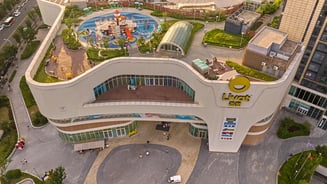
Last year, Ingka Centres welcomed Pippi Longstocking to a series of its Livat Meeting Places in China – blending local creativity with Swedish heritage. The company has also run playful activations across Europe, including pillow-fighting in France and esports in Sweden.
However, the data suggests play can also take place in more subtle ways: urban nature zones (67%), calm corners (59%), and community hangouts (57%) were all leading responses to spaces people would be interested in to help them play more in everyday life.
In turn, Ingka Centres is integrating relaxing, natural community spaces into many of its meeting places. In India, the Lykli Gurugram meeting place – currently under development – will feature a garden with a landmark focal tree, where local visitors can gather to eat, hang out, and get more playful away from a bustling urban area.
To explore the full Life in Communities 2026 report, please download here.
Notes to Editors
*The research was conducted by Future Minds (qualitative desktop research and expert interviews) and Ipsos (quantitative research) among a nationally representative sample of 3,000 adults aged 18+ across China, India (NCT Delhi), Poland, Spain, Sweden and the UK, with 500 respondents per country. Findings from both studies were combined in the final report.
About Ingka Centres
Ingka Centres is part of the Ingka Group (which also includes IKEA Retail and Ingka Investments). Ingka Centres has more than 50 years of experience in shopping centres and today works with over 2500 brands across its portfolio of 38 meeting places in 15 markets. The company hosts and serves more than 320 million visitors each year. Ingka Centres creates its meeting places by collaborating with local communities, as well as its tenants and partners, to ensure they are destinations with emotional meaning that add value and build social connections.
More information: LinkedIn, Facebook, X.
About Ingka Group
With IKEA retail operations in 32 markets, Ingka Group is the largest IKEA retailer and represents 87% of IKEA retail sales. It is a strategic partner to develop and innovate the IKEA business and help define common IKEA strategies. Ingka Group owns and operates IKEA sales channels under franchise agreements with Inter IKEA Systems B.V. It has three business areas: IKEA Retail, Ingka Investments and Ingka Centres. Read more on Ingka.com.
Media enquiries
For further information, journalists and media professionals can contact us at [email protected] or by calling +46 70 993 6376.